Why Would You Use MIG Welding? (2024)

Why Would You Use MIG Welding? (2024)

Why Would You Use MIG Welding?

Introduction

MIG (Metal Inert Gas) welding is a widely used arc welding process that joins metals by feeding a continuous solid wire electrode through a welding gun directly into a weld pool. This method utilizes an inert shielding gas, such as argon, to protect the weld from environmental contaminants that could lead to defects. Its versatility and efficiency make MIG welding a staple in numerous industries and applications, ranging from aerospace to automotive and construction.

Below, we explore the industries that rely on MIG welding and why it has become an indispensable tool in modern manufacturing and repair processes.

Why Would You Use MIG Welding?

Industries that use MIG Welding

MIG welding is a versatile and efficient welding method utilized across various industries. Its ability to produce strong, durable welds on a wide range of materials has made it a staple in sectors like aerospace, automotive, and construction. Below is an in-depth look at how these industries rely on MIG welding and why it remains a preferred choice.

Aerospace Industry

MIG welding plays a crucial role in the aerospace industry, particularly in the manufacturing and maintenance of aircraft. Historically, gas welding was the go-to method for joining materials in aerospace applications until the 1950s. However, MIG welding quickly gained prominence because of its superior precision, strength, and ability to work effectively with lightweight metals like aluminum and stainless steel.

Aircraft components demand materials that are both lightweight and durable to ensure optimal performance and safety. Aluminum, a primary material in aerospace construction, pairs perfectly with MIG welding techniques due to its specific requirements for clean, high-quality welds. MIG welding allows for seamless joints and ensures the structural integrity of critical components like fuselage sections, wing panels, and fuel tanks.

In maintenance operations, MIG welding is frequently used to repair damaged parts efficiently without compromising their performance. The process’s speed and consistency make it ideal for keeping aircraft operational, reducing downtime, and ensuring safety standards are met.

Automotive Industry

The automotive industry heavily relies on MIG welding for both manufacturing and repair processes. It is used in numerous applications, including:

Repairing Vehicles: MIG welding is ideal for fixing damaged vehicle parts, including car bodies, motorcycle frames, and van panels. Its precision ensures a clean finish, maintaining the vehicle’s structural and aesthetic integrity.
Welding Sheet Metal: Automotive production involves significant use of aluminum, stainless steel, and mild steel, particularly for car frames and panels.

The automotive industry requires welding methods that can handle materials subjected to constant stress and environmental exposure. MIG welding’s flexibility allows it to create durable, corrosion-resistant welds that can withstand years of road use. Additionally, its ease of use and high welding speeds make it a cost-effective option for large-scale manufacturing.

Laser MIG Welding: The Future of Automotive Welding
An advanced variation of MIG welding, laser MIG welding, combines traditional MIG welding with laser beam technology. This hybrid process uses a laser beam to concentrate energy on a small area, allowing for deep penetration and faster processing. MIG welding adds filler material to the weld pool, ensuring a strong bond.

Advantages of Laser MIG Welding:

  • Efficiency: Laser MIG welding processes welds faster, reducing production times significantly.
  • Material Savings: It uses less filler material than traditional methods, making it more cost-effective.
  • Precision: The laser beam ensures high-quality welds with minimal distortion, even on thin or intricate components.

The automotive industry is increasingly adopting laser MIG welding for modern vehicles, particularly for working with aluminum, which is becoming more prevalent due to its lightweight properties.

Construction and Infrastructure

The construction and infrastructure sectors heavily depend on MIG welding for fabricating and assembling essential structural components. As more than half of the world’s steel is used in construction, MIG welding has become a vital process for ensuring the durability and safety of buildings, bridges, and infrastructure.

MIG welding is renowned for its ability to handle diverse materials and provide strong, long-lasting welds. It is particularly effective for large-scale projects requiring consistent, reliable results. Key applications in construction include:

  • Building structural frameworks.
  • Fabricating rebar for concrete reinforcement.
  • Creating durable bridges and industrial equipment.

Metals Used in Construction and Their Importance

Carbon Steel

Carbon steel is one of the most widely used materials in construction due to its exceptional durability, strength, and versatility. It is available in a range of grades, from mild carbon steel, which is easier to shape and weld, to high-carbon steel, which is harder and more resistant to wear. This variability allows engineers and builders to select the right grade for specific applications.

Applications

Structural Frameworks: Carbon steel is the backbone of modern construction. It is commonly used for beams, columns, and other load-bearing elements due to its high tensile and compressive strength.
Highway Plates and Infrastructure: Its durability makes it a popular choice for bridge plates, retaining walls, and highway guardrails, where strength and longevity are critical.
Rebar and Reinforcement: Carbon steel’s tensile strength and ability to bond with concrete make it ideal for reinforcing concrete structures, enhancing their durability under heavy loads.
Hollow Structural Sections (HSS): These sections, used for welded frames and trailer beds, offer a lightweight yet strong solution for transportation and industrial projects.

Copper

Copper is renowned for its excellent corrosion resistance, high conductivity, and recyclability, making it indispensable in various construction and infrastructure projects. Its malleability allows it to be easily shaped into pipes, wires, and other components, while its resistance to environmental factors ensures long-term reliability.

Applications

Piping Systems: Copper tubing is extensively used in plumbing for water supply, as well as in HVAC systems for refrigerant lines and heat exchangers. Its antimicrobial properties make it a preferred choice for potable water lines.
Electrical Wiring: Its superior conductivity and resistance to corrosion ensure efficient and safe power distribution in buildings.
Roofing and Flashing: In some high-end construction projects, copper is used for roofing and flashing, where its aesthetic appeal and weather resistance add value.
Recyclability: Copper is one of the most recycled materials in the construction industry, making it an eco-friendly choice that aligns with sustainability goals.

Aluminum

Aluminum’s combination of lightweight properties, resistance to corrosion, and high ductility makes it a popular choice for outdoor and structural applications. Its ability to withstand harsh weather conditions while maintaining structural integrity makes it especially valuable in construction.

Applications

Window Frames and Doors: Aluminum is widely used for modern window frames and doors, providing strength without adding excessive weight.
Streetlights and Signage: Its corrosion resistance ensures long-lasting performance in outdoor environments, even in areas exposed to moisture and pollution.
Structural Elements: Aluminum is often used in lightweight framing systems, curtain walls, and temporary structures due to its easy workability and high strength-to-weight ratio.
Transportation Infrastructure: Aluminum is also used in bridge construction and other transport-related structures where reduced weight can lead to significant cost savings.

Stainless Steel

Stainless steel is highly valued for its resistance to corrosion, staining, and wear, making it suitable for a wide range of structural and decorative applications. Its longevity and ability to retain its appearance over time have made it a material of choice for both functional and aesthetic purposes.

Applications

Architectural Cladding and Facades: Stainless steel provides a sleek, modern look while offering protection against weathering, making it a staple in contemporary building design.
Drainage Systems: Its corrosion resistance ensures the reliability and longevity of drainage systems in commercial and residential buildings.
Handrails and Balustrades: Stainless steel is a popular material for safety and decorative features in buildings, offering both strength and visual appeal.
Food-Grade and Sanitary Applications: In environments such as hospitals, kitchens, and food processing plants, stainless steel is used for its hygiene properties and ease of cleaning.

MIG Welding’s Role in Working with These Metals

MIG welding plays a crucial role in joining and fabricating these metals across various industries. Its ability to create durable, high-quality welds with minimal defects ensures that these materials perform optimally in their applications. The versatility of MIG welding allows it to adapt to the unique requirements of each metal, whether it’s welding thick carbon steel beams for structural frameworks, delicate copper tubing for HVAC systems, lightweight aluminum components for outdoor signage, or polished stainless steel for architectural elements.

This adaptability and efficiency ensure that MIG welding remains a cornerstone of modern engineering and manufacturing, enabling industries to meet the demands of durability, sustainability, and innovation.

Why Choose MIG Welding?

MIG welding (Metal Inert Gas welding) is one of the most versatile and efficient welding methods available, offering distinct advantages across a variety of industries. Its unique combination of ease of use, speed, versatility, and weld quality makes it a preferred choice for professionals and beginners alike.

Ease of Use

One of the most appealing aspects of MIG welding is its straightforward operation. The process involves feeding a continuous wire electrode through a welding gun, making it easier to control than other methods like TIG or stick welding. This simplicity makes MIG welding an excellent option for beginners, as it requires minimal training to produce satisfactory results. The automated wire feed system also eliminates the need for frequent stops to replace electrodes, which further simplifies the process and reduces errors.

Speed

MIG welding is renowned for its speed. The continuous wire feeding system enables welders to maintain a steady pace, significantly reducing the time required to complete projects compared to methods like stick welding. This advantage is particularly important in industries like automotive manufacturing and construction, where efficiency and productivity are crucial. The ability to weld quickly without sacrificing quality allows MIG welding to meet the high demands of large-scale production.

Versatility

MIG welding stands out for its ability to work with a wide range of metals and material thicknesses. It is compatible with materials such as aluminum, stainless steel, mild steel, and copper, making it suitable for diverse applications across aerospace, automotive, and construction industries. This versatility means that welders can use a single machine to handle multiple tasks, from repairing thin sheet metal to fabricating heavy-duty structural components. Additionally, the adaptability of MIG welding extends to different welding positions, whether flat, horizontal, vertical, or overhead.

Quality

MIG welding produces high-quality welds with minimal spatter, ensuring clean and visually appealing results. The use of inert shielding gases like argon or a mixture of argon and carbon dioxide protects the weld pool from contamination, resulting in stronger, defect-free welds. This level of precision and reliability makes MIG welding ideal for applications where the appearance and integrity of the weld are critical, such as automotive bodywork and architectural elements.

The Role of MIG Welding in Sustainability

MIG welding is not only efficient but also contributes to sustainability efforts in manufacturing and construction. By maximizing material usage and reducing waste, MIG welding aligns with modern eco-conscious practices. Here’s how:

Efficient Material Usage

The continuous wire feeding system ensures that filler material is used optimally, reducing wastage compared to other welding methods. This efficiency is particularly valuable in industries that work with expensive metals like aluminum and copper.

Recycling Capabilities

MIG welding is compatible with recyclable metals, such as aluminum and steel, making it a key process in sustainable manufacturing. The ability to repair and reuse existing components further minimizes the need for new raw materials, reducing the environmental footprint of production processes.

Reduced Energy Consumption

Compared to traditional welding methods, MIG welding’s faster process times mean less energy is consumed per weld. This advantage is especially significant in large-scale industrial operations where cumulative energy savings can have a substantial environmental impact.

Cleaner Welding Process

The use of inert shielding gases minimizes the production of harmful fumes and spatter, resulting in a cleaner and safer work environment. This contributes to improved air quality in manufacturing facilities, protecting workers and reducing the need for additional ventilation equipment.

Why MIG Welding Remains a Cornerstone of Modern Manufacturing

The combination of ease of use, speed, versatility, and high-quality results makes MIG welding a cornerstone of modern manufacturing and construction. Whether you’re repairing an automobile, building a bridge, or fabricating aerospace components, MIG welding offers a reliable and efficient solution that meets the demands of precision and productivity. Its role in promoting sustainability further solidifies its relevance in a world increasingly focused on eco-friendly practices. As technology continues to evolve, advancements in MIG welding equipment and techniques will ensure its place as a leading welding method for years to come.

Conclusion

MIG welding is an essential process in industries ranging from aerospace to automotive and construction. Its ability to produce strong, durable, and clean welds on a variety of materials has cemented its place in modern manufacturing and repair work. Whether you’re building an aircraft, repairing a car, or constructing a skyscraper, MIG welding offers the reliability and versatility needed to get the job done efficiently and effectively. As advancements like laser MIG welding continue to emerge, this technique will remain at the forefront of innovation in welding technology.

Additional Resources

Get your welding gear here.

How to choose a shielding gas for your welds

You can choose from a variety of different shielding gases and blends when you’re welding.

There are a few things you must understand before you’re able to make an informed decision on the type of shielding gas you need.

These are the questions you should ask yourself before you choose a shielding gas.

  1. Do you care about the “look” of the weld?
  2. Does spatter matter to you?
  3. Does the weld require a deep penetration, or do you want to minimize weld penetration as much as possible?
  4. Are you concerned about how many fumes your weld generates?

There are a few other questions you should ask yourself but, these are the base questions.

The following process can help you select the correct gas blend for your welds.

  1. What kind of materials are you welding?
  2. How thick is the material and what kind of condition is it in?
  3. What kind of welding position do you want to use? Also understand that the process you use is also hindered by the equipment you have available as well as your skills and productivity levels you desire.
  4. What are the requirements of the job? The chart below will give you a solid understanding of what you should be looking for.

What’s the function of shielding gas?

The main function of shielding gas is to reduce the weld’s exposure to outside contaminants such as oxygen, hydrogen, nitrogen, etc. When a weld is introduced to these elements it can cause imperfections to occur such as:

Types of Shielding Gasses

ArgonColor-less, odor-less, and non-toxic noble gas that makes up about .93% of the earth’s atmosphere. Argon helps provide a clean and inert environment that’s rid of oxygen and nitrogen. For metal fabrication Argon is used to create an inert gas shield during welding. It’s also occasionally mixed with oxygen, helium, hydrogen, or carbon dioxide to facilitate metal transfer in MIG welding.

Argon has low conductivity and ionization potential, which are properties that result in a transfer of heat to the arc’s outer regions.

HeliumColor-less, odor-less, taste-less, chemically inert, and non-toxic, helium is non-flammabe while also having a high thermal conductivity. Helium usually helps increase travel speed and weld pool fluidity. Helium has a high ionization potential and conductivity, which yields opposite effects of Argon.

Carbon DioxideCo2 is an odor-less, taste-less, color-less, non-flammable. It’s typically used alongside Argon during welding or in its pure vapor state. Doing so prevents contaminants from the atmosphere to enter the weld. At the temperatures created in the arc Co2 tends to disassociate and turn into Co and O2. This results in oxidizing of the base metal as well as dealloying of the bead.

Oxygen21% of the earth’s atmosphere is made up of oxygen. It’s also a taste-less, odor-less, color-less gas and is used to support oxyfuel in curring operations. Oxygen creates a shallow penetration profile with high heat input at the surface of the work.

PropaneA color-less, liquified, and flammable gas that naturally smells like gas. The flame temperature of an oxy-propane flame is lower than that of propylene or acetylene.

PropyleneA liquified, flammable, color-less gas that smells slightly sweet. Propylene has the qualities of an acetylene flame and the secondary heating capacity of propane.

NitrogenNitrogen that makes up about 78% of the earth’s atmosphere. It’s a non-toxic, taste-less, color-less, and is non-flammable at atmospheric temperatures / pressures.

Each of these gasses can be used separately or they can be mixed with one another to yield different effects. When gasses are blended with one another they’re mixtures are expressed in percentages.

Examples: Argon 95% – 5% Co2 (This means the blend is 95% Argon and the remaining 5% is Carbon Dioxide) or Argon 90% – 10% Co2 (This means the blend is 90% Argon and 10% Co2)

How to choose a shielding gas for MIG welding

When you MIG weld with a shielding gas (and the correct solid wire electrode) you produce a decent looking, clean weld and eliminate the need to constantly change your welding electrode. This means that using a shielding gas will make the welding process more efficient and much cleaner of a process.

The term “MIG” stands for Metal Inert Gas (it’s also called Gas Metal Arc Welding or Metal Active Gas) which means that welders typically use an inert gas to shield their welds with. Inert gasses typically used in MIG welding are Argon and Helium.

When you’re choosing a shielding gas it’s still a great idea to consult a professional at a welding store as they’ll be able to give you input designed to fit your needs. 

Typically, you’ll see mixed shielding gasses being used for MIG welding (with some of these gasses being active gasses).

Shielding gasses for MIG welding

A thing to keep in mind when you’re MIG welding is that there are a number of shielding gasses / mixes you can choose. Knowing that, there are a few considerations you’ll want to take before you choose your gas:

  • How much does the shielding gas cost?
  • How do you want the weld to look?
  • The material you’re weld
  • How the weld was prepped
  • The post-weld clean up
  • Weld transfer process
  • How productive do you want to be?

A few of the commonly used mixes for MIG (MAG / GMAW) welding are: 

  1. 2% Carbon Dioxide and 98% Argon: Is great for stainless steel.
  2. 25% Carbon Dioxide and 75% Argon
  3. 100% Carbon Dioxide: Is great for Carbon Steel and produces the deepest penetration, roughest weld, and smoke.
  4. 100% Argon: Typically used for Aluminum, Copper, Copper Alloys, Magnesium, Nickel, Nickel Alloys, and Titanium.

Video credits to Lincolnelectrictv. It has a great explanation for choosing a shielding gas and goes over the costs of each kind.

How to choose a shielding gas for TIG Welding

The typical gas used for TIG welding is Argon while Helium can also be added to create a mixture that increases the fluidity and penetration of the weld pool.

A few of the commonly used mixes for TIG (GTAW) welding are: 

  1. Ar + Hea    
  2. Ar + (2-5)% H2a,b
  3. Ar + (1-2)% N2
  4. Ar + 30% He + (1-2)% N2

*a means that it improves flow when compared to Pure Argon

*b means that it’s preferable for Automatic welding, has a high welding speed, and runs the risk of porosity in multi-run welds.

Video credits to Weldingtipsandtricks. It explains the process of choosing a shielding gas for TIG welding.

What is optimal gas flow?

The flow rates for shielding gas are determined by the welding process, operating parameters, and welding position. With GTAW, the flow rate is typically between 10 and 20 CFH or cubic feet per hour. For GTAW when you use a torch alongside a gas lens you’ll ensure a laminar flow, something that contributes to high weld quality, as well as lower than 10 percent gas consumption rates.

With FCAW and GMAW, the flow rate that’s recommended will vary – between 30 and 45 CFH – varying with the welding position, shielding gas composition, and operating current. When it comes to flat position welding, the helium enhanced mixtures require a slightly higher flow rate than weld that’s argon based. The gas flow rates will likely be reduced if the work to nozzle distance is as close as possible. In a few instances, the production site surveys will determine that the shielding gas flow rates are typically set in excess of 50 CFH. This may contribute to a poor weld quality as the atmospheric gases will be drawn into the arc zone because of too much gas turbulence. An optimized flow will enhance the quality and will reduce shielding gas usage.

Cost effective joining and shielding gasses

The selection of a shielding gas is highly important to get cost-effective joining of aluminum, carbon steel, and stainless steel. One can select a gas, like argon when doing aluminum welding, to achieve a suitable bead shape, minimum spatter, and suitable arc stability.

2-part blends such as carbon dioxide/argon mixtures, could perform well in a number of stainless steel and carbon steel applications where one would use pulsed spray or conventional transfer.

A lower carbon dioxide content will lower the amount of welding fumes that are generated. When you need less post weld cleanup, enhanced bead appearance, and low spatter, 3 part gas blends will provide solid results and also improve upon the welding productivity.

The base metal thickness, operator skill level, production demands, and welding position will need to be carefully considered when one is optimizing and selecting a joining process. When you have an understanding of shielding gasses, you’ll be able to optimize the welding process so as to improve quality and lower cost.

What Are Welding Defects?

As with any process, you are bound to encounter defects in the process. You can encounter things such as misshapes and off sizing of the metal. This can occur due to either a bad welding process or bad technique. Listed below are the most common defects that you’re likely to find.

There are 2 types of welding defects: External Welding Defects and Internal Welding Defects.

Internal welding defects include:

External welding defects include:

  • Porosity
  • Welding Cracks
    • Crater Cracks
    • Cold Cracks
    • Heat Cracks
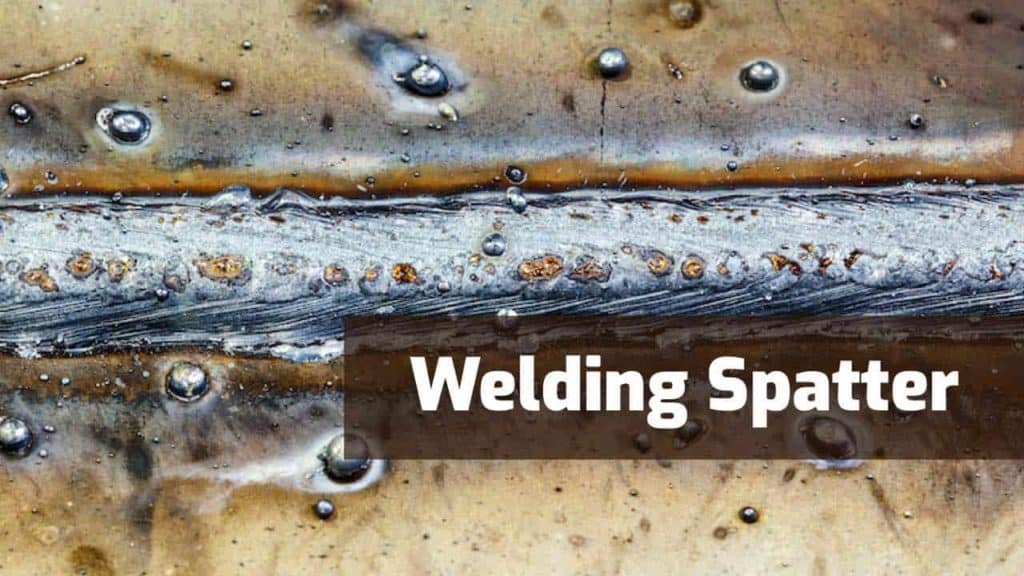
  • Spatter
  • Overlap
  • Undercut

What are External Welding Defects?

Overlap

What is Overlap in welding?

Overlap is the considered a protrusion of weld metal beyond the weld root. Overlap typically occurs in butt joints and fillet welds and results in notches occurring at the toe of the weld. These notches are undesirable due to the stress concentration that occurs under load. These discontinuities are caused by either insufficient current or incorrect welding technique.

How does overlap occur in welding? 

Overlap in welding occurs when the molten metal from the weld flows over the surface of the base material and then cools without fusing to the base material. A common cause of overlap in welding is having too much weld metal supplied because of the weld speed being too low. When there is overlap in fillet welds it’s typically caused by the effect of gravity on excessive molten metal.

How do you fix overlap in welding? 

To avoid overlap you must make sure to review your welding settings (welding speed and current).

Video credits to Weld.com. It goes over ways to prevent weld overlap.

Spatter

What is spatter in welding?

When you have particles that attach to the surrounding areas of the surface the result is spatter. Surprisingly it’s pretty common in welds done with gas metal arc welding. It’s also one of the defects that you can’t completely eliminate, no matter how hard you try. It is, however, possible to keep its occurrence as low as possible.

How does spatter occur in welding?

  1. When your amperage is too high
  2. When the setting of voltage is too low
  3. When your welding surface is contaminated
  4. When your arc is long
  5. When you have an incorrect polarity

How do you fix spatter?

  1. Make sure you welding surface is clean before you weld
  2. Reduce your overall arc length
  3. Fix your weld current
  4. Fix the electrode angle

Cracks

What are cracks in welding?

A serious complication that many welders tend to encounter during the process are cracks in the weld. These cracks can manifest anywhere in the weld, such as in the metal, on the surface, or anywhere else that touches the heat of the welder.

The different types of cracks are:

  • Heat cracks
  • Cold cracks
  • Crater cracks

What are heat cracks in welding? 

These typically occur in the crystallization portion of the welding process. Temperatures of the metal at this point typically rises to over 10000C

What are cold cracks in welding?

These types of cracks typically show up after the weld has been finished. They can sometimes take longer than average periods to show and will manifest as slight deformities in the metal.

What are crater cracks in welding?

These types of cracks tend to show at the end of the entire process and occur at the end of the weld. When there is not enough room at the end of the weld for shrinkage of the weld metal a crater crack forms.

Why do welding cracks occur?

  1. When you use hydrogen while welding ferrous metals
  2. When there’s residual stress from the solidification shrinkage
  3. When the base metal is contaminated
  4. When you are welding with a high welding speed but with a low current
  5. When you don’t preheat before you weld
  6. When there’s a bad joint design
  7. When there’s a high sulfur content and alot of carbon in your metal

How do you fix welding cracks?

  1. Preheat your metal when it’s required
  2. Properly cool the welding area
  3. Have a correct joint design
  4. Take away any impurities
  5. Use the right metal
  6. Have a sufficient sectional area
  7. Use the correct amperage and welding speed
  8. Make sure your crater is properly filled

This is also one of the reasons why it’s important to hold these welding skills

Video credits to Garry Pace. It details the different types of welding cracks.

Porosity

What is porosity in welding?

When there is contamination in your weld porosity can result. When you have gases in your weld you have a weld that is weak and collapses over time.

Why does porosity occur in welding?

  1. When there is not enough electrode deoxidant
  2. When you use a longer arc
  3. When there is moisture in the weld
  4. When you don’t use a correct gas shield
  5. When you use too much gas flow
  6. When your surface is contaminated

How does porosity occur in welding?

  1. Clean your welding material before you weld
  2. Make sure your electrodes and materials are dry
  3. Have the correct arc distance
  4. Make sure that the gas flow to the machine is properly adjusted
  5. Reduce your arc travel speed
  6. Make sure you have the correct electrodes
  7. Weld with the correct technique

Video credits to Miller Welders. It goes over how to fix porosity in your welds – The right way!

Undercut

What are undercuts in welding?

When you have a groove formation at the weld toe you come into contact with this imperfection. When you have an undercut you have a weakened weld.

Why does undercutting occur?

  1. When you weld with too high a current
  2. When you weld to quickly
  3. When you use an incorrect angle when you weld
  4. When the electrode you weld with is too large
  5. When you use an incorrect amount of shielding gas
  6. When you don’t have the right filler metal

How do you fix undercutting in welding?

  1. Use the correct electrode angle
  2. Make your arc length shorter
  3. Weld with a lower electrode travel speed
  4. Weld with the correct shielding gas
  5. Use the right electrode angle

Video credits to Herbert Bartley. It talks about how to avoid undercut in welds.

What are Internal Welding Defects?

Unfinished Penetration

What is Unfinished Pentration in welding?

When the groove of the metal isn’t filled completely the result is an incomplete penetration. This also means that the weld metal won’t fully extend throughout the thickness of the joint.

How do unfinished penetrations occurs?

  1. When there is to much space in the metal you’re welding
  2. When you move the bead too quickly
  3. When you’re using too low of an amperage setting
  4. When there is too large of an electrode diameter
  5. When there is an improper joint

How do you fix unfinished penetration in welding?

  1. Make sure to have a proper joint geometry
  2. Have a properly electrode size
  3. Reduce your overall arc travel speed
  4. Make sure to have the correct welding current
  5. Have the correct alignment

Video credits to Kevin Caron, Artist. It goes over way to make sure you get good welding penetration.

Slag in the weld

What is slag in the weld?

When you have slag in your weld you can tell by simply looking at it. Slag is a byproduct of flux-cored welding, stick welding, and submerged arc welding. When the flux used in the welding melts you can encounter slag in your weld.

How does slag in the weld occur?

  1. When you don’t clean the weld correctly
  2. When the weld speed is too fast
  3. When you neglect to clean the weld pass and move on to another one.
  4. When you have an incorrect welding angle
  5. When your weld pool cools too quickly
  6. When the current you use to weld is too low

How do you fix slag in the weld?

  1. Make your current denser
  2. Fix the cooling rate of the weld
  3. Fix the angle of the electrode
  4. Remove the slag from the bead
  5. Fix the speed of the weld

Video credits to xAZAZELx13. This video goes over how to repair slag in the weld.

Unfinished Fusion

What is unfinished fusion?

When there isn’t a proper fusion in the base of the weld and in the weld metal you have an improper fusion. You can also find this in the adjoining beads of the weld. When you have unfinished fusion, you have a weld with gaps that don’t have molten metal in them.

Why do unfinished fusions occur?

  1. When you don’t have enough heat
  2. When the surface of the weld is contaminated
  3. When you have an incorrect electrode angle
  4. When you weld with too fast a travel speed

How do you fix unfinished fusion?

  1. Make sure to use the correct arc voltage for your weld
  2. Clean the metal before you weld
  3. Keep the molten metal from flooding the arc
  4. Lower your disposition rate

Necklace Cracking

What is Necklace cracking in welding?

Necklace cracking occurs when the electron beam weld doesn’t fully penetrate fully and a blind weld occurs. In these instances molten metal neglects to flow into the penetration cavity and onto the side walls of the workpiece. This occurs in metals such as is carbon steel, nickel base alloys, stainless steel, titanium alloy.

What is the cause of necklace cracking in welding?

The common causes of necklace cracking in welding are:

  • Improper welding tehnique

What are a few remedies for necklace cracking?

A few known remedies for necklace cracking are:

  • Using proper welding technique
  • Using proper materials for welding
  • Making sure to use a constant speed while welding
error: Content is protected !!