What Is Plastic Welding? (2024)

What Is Plastic Welding

What Is Plastic Welding?

Plastic welding is a process used to join plastic materials by applying heat, pressure, or both to create a strong and durable bond. Unlike traditional adhesives or fasteners, plastic welding fuses materials at a molecular level, ensuring a seamless and robust connection. This technique is crucial in industries such as automotive, construction, and manufacturing, where lightweight, durable, and cost-effective components are in high demand.

Understanding Plastic Welding

Plastic welding involves heating the surfaces of two plastic components until they reach their melting point, applying pressure to fuse them, and then allowing the joint to cool and solidify. This method ensures a secure bond by merging the materials into a single unit. Unlike metal welding, plastic welding operates at lower temperatures and focuses on maintaining the integrity of thermoplastic materials.

Types of Plastic Welding

Hot Gas Welding

Hot gas welding is a versatile method that uses a heat gun or torch to direct a stream of hot air onto the surfaces of plastic components and a filler rod, causing them to melt and bond together. The technique is particularly effective for thermoplastics like PVC (polyvinyl chloride), polypropylene, and polyethylene, making it a popular choice for industrial applications.

  • Applications: Hot gas welding is frequently used in fabricating and repairing plastic containers, piping systems, and ductwork. It is also utilized in creating custom parts for construction, automotive, and chemical industries.
  • Advantages: This method is cost-effective for medium-scale projects and allows precise control over the welding process.
  • Challenges: Hot gas welding requires skilled operators to ensure proper heat distribution and avoid overheating, which can weaken the weld.

Ultrasonic Welding

Ultrasonic welding employs high-frequency sound waves (typically in the range of 20 kHz to 40 kHz) to generate localized heat at the joint between two plastic components. The high-frequency vibrations cause the plastic to melt and fuse, forming a strong and precise bond upon cooling.

  • Applications: This method is extensively used in the medical device industry for assembling syringes, IV catheters, and surgical tools. It is also critical in electronics manufacturing for components like battery casings and circuit boards.
  • Advantages: Ultrasonic welding is fast, efficient, and requires no additional adhesives or filler materials. It is ideal for applications demanding precision and cleanliness.
  • Challenges: Equipment for ultrasonic welding can be costly, and the process is typically limited to smaller components with tight tolerances.

Spin Welding

Spin welding is a specialized technique in which one plastic component is rotated at high speed while pressed against another stationary component. The resulting friction generates heat, melting the contact surfaces and creating a solid bond as they cool.

  • Applications: Spin welding is commonly used for joining circular or cylindrical components, such as caps, filters, and nozzles.
  • Advantages: This method is highly efficient for round components and produces strong, consistent welds without the need for additional materials.
  • Challenges: Spin welding is limited to applications with rotational symmetry and may require precise alignment to ensure a quality bond.

Extrusion Welding

Extrusion welding involves the continuous feeding of a molten plastic filler material into the joint while simultaneously applying heat to the plastic surfaces being bonded. The filler material acts as a bridge, enhancing the strength and integrity of the joint.

  • Applications: Extrusion welding is widely used in large-scale applications such as fabricating storage tanks, repairing geomembranes, and constructing pipelines.
  • Advantages: This method is well-suited for heavy-duty applications and produces welds with excellent mechanical properties.
  • Challenges: The process requires specialized equipment and is typically slower than other plastic welding methods. Skilled operators are needed to achieve consistent results.

Heat Sealing

Heat sealing relies on the application of direct heat and pressure to join thermoplastic materials, usually in the form of thin sheets or films. The materials are pressed together while heat is applied, causing them to bond upon cooling.

  • Applications: Heat sealing is a staple in the packaging industry, used for creating airtight seals in shrink wraps, blister packs, and food storage bags.
  • Advantages: This method is simple, efficient, and suitable for high-volume production lines. It provides a reliable, tamper-proof seal that protects the contents of the package.
  • Challenges: Heat sealing is limited to thinner materials and may not be suitable for applications requiring high mechanical strength.

By employing these diverse welding techniques, industries can address specific material and design requirements, ensuring optimal performance and durability in a variety of plastic fabrication projects.

Applications of Plastic Welding

Plastic welding has become an integral process across diverse industries, thanks to its versatility and ability to create durable, lightweight, and cost-effective bonds in thermoplastics. Below are some key sectors where plastic welding plays a vital role:

Automotive Industry

Plastic welding is extensively used in the automotive sector to assemble various components, offering strength and efficiency while reducing weight.

  • Dashboard Assemblies: Components such as air vents, instrument panels, and control housings are welded to ensure a seamless finish and robust structure.
  • Fuel Tanks: Welded plastic tanks are lightweight, corrosion-resistant, and capable of handling extreme conditions, making them a preferred choice in modern vehicles.
  • Bumpers and Body Panels: Automotive bumpers and body panels are often welded to withstand impact and ensure aesthetic integrity.

Medical Industry

The medical industry relies heavily on plastic welding to produce sterile, reliable, and precise products.

  • Syringes and IV Bags: Welded plastic ensures leak-proof and contaminant-free assemblies, which are essential for patient safety.
  • Surgical Tools: Ultrasonic and laser welding methods are used to create precision joints in medical devices, maintaining high standards of hygiene and functionality.
  • Medical Packaging: Sealed plastic packaging for medical instruments and pharmaceuticals is achieved through heat sealing, providing a sterile barrier.

Packaging Industry

Plastic welding is indispensable in the packaging industry for creating secure, durable, and visually appealing packaging solutions.

  • Blister Packs: Welded plastic packs are commonly used for electronics, pharmaceuticals, and consumer goods, offering protection and product visibility.
  • Shrink Wraps: Heat sealing in shrink wraps ensures airtight protection for perishable items like food and beverages.
  • Food Containers: Plastic welding creates leak-proof seals in food storage containers, ensuring freshness and extending shelf life.

Construction Industry

In construction, plastic welding contributes to durable and long-lasting infrastructure components.

  • Piping Systems: Welding techniques like extrusion welding are employed to create strong, leak-resistant joints in PVC, HDPE, and polypropylene pipes.
  • Roofing Membranes: Plastic welding is used to bond thermoplastic membranes for waterproofing and insulation in roofing applications.
  • Geosynthetic Linings: Welded plastic liners are essential for landfills, reservoirs, and tunnels to prevent leakage and environmental contamination.

Consumer Goods Industry

Plastic welding is widely utilized in manufacturing a variety of consumer goods to improve functionality, aesthetics, and durability.

  • Toys: Welded plastic ensures durability and safety in children’s toys, enabling precise and robust designs.
  • Electronics: Products like smartphones, laptops, and appliances often incorporate welded plastic casings to protect delicate internal components and provide a sleek appearance.
  • Appliances: From washing machines to vacuum cleaners, plastic welding is used to assemble various parts, ensuring efficiency and reliability.

By tailoring plastic welding techniques to the specific needs of each industry, manufacturers achieve high-quality results while optimizing cost, weight, and durability. This versatility makes plastic welding an essential process across modern manufacturing and industrial applications.
Materials Suitable for Plastic Welding

Plastic welding is most effective with thermoplastics—materials that soften when heated and harden upon cooling, making them ideal for welding processes. These plastics can be repeatedly melted and reformed, enabling strong, durable bonds. The suitability of a material for plastic welding depends on factors such as its melting temperature, chemical composition, and physical properties.

Common Thermoplastics for Plastic Welding

  1. Polyethylene (PE)
    • Properties: Lightweight, durable, and highly resistant to chemicals and moisture.
    • Applications: Commonly used in piping, tanks, containers, and geomembranes. Its weldability makes it a favorite in industrial and construction settings.
  2. Polypropylene (PP)
    • Properties: High resistance to fatigue, excellent chemical resistance, and low density.
    • Applications: Frequently used in automotive components, medical devices, and consumer goods. Its ease of welding makes it ideal for creating intricate designs and strong joints.
  3. Polyvinyl Chloride (PVC)
    • Properties: Stiff, strong, and resistant to corrosion and weathering.
    • Applications: Widely employed in plumbing, electrical conduit, and signage. PVC welding is popular for creating leak-proof joints in piping systems.
  4. Acrylonitrile Butadiene Styrene (ABS)
    • Properties: Tough and impact-resistant, with good dimensional stability.
    • Applications: Commonly used in automotive interiors, toys, and electronic housings. ABS welding is favored for its ability to produce smooth and durable seams.
  5. Polycarbonate (PC)
    • Properties: High impact strength, transparency, and resistance to heat.
    • Applications: Often used in medical equipment, optical lenses, and construction materials. PC welding ensures strong bonds without compromising its clarity or durability.
  6. Nylon (Polyamide)
    • Properties: Excellent mechanical strength, wear resistance, and low friction.
    • Applications: Found in gears, bearings, and industrial components. Nylon welding requires precise control of heat to avoid material degradation.

Factors Influencing Weldability

  1. Melting Temperature
    • Thermoplastics with a narrow melting temperature range are easier to weld. Excessive heat can degrade the material, while insufficient heat can lead to weak bonds.
  2. Chemical Composition
    • The chemical structure of the plastic affects its ability to fuse. For instance, polar plastics like PVC and ABS weld more easily than non-polar plastics like polyethylene, which may require special surface treatments.
  3. Material Thickness
    • Thicker materials require more heat and time to achieve proper fusion, while thinner materials demand precise control to prevent warping or burn-through.
  4. Compatibility
    • Only similar thermoplastics can be effectively welded together. Attempting to weld dissimilar plastics often results in poor adhesion or joint failure due to differences in melting points and chemical properties.

Unsuitable Materials: Thermosetting Plastics

Thermosetting plastics, such as epoxy, bakelite, and melamine, are not suitable for plastic welding. These materials undergo a chemical change during their initial curing process, making them unable to soften or re-melt when reheated. Instead, they char or degrade under high temperatures, rendering welding techniques ineffective. Alternative joining methods, like adhesives or mechanical fasteners, are typically used for thermosetting plastics.

Specialized Materials

  1. Composite Materials
    • Certain composites containing thermoplastic matrices can be welded, provided the reinforcement materials (e.g., fibers) do not interfere with the process.
  2. Modified Plastics
    • Plastics enhanced with additives for improved properties (e.g., UV resistance or flame retardancy) may still be weldable, but their behavior during welding should be carefully assessed.

By understanding the properties and behaviors of different plastics, manufacturers can select the right material and welding method for their applications. This ensures high-quality results and durable bonds, even in demanding environments.

Advantages of Plastic Welding

Lightweight and Durable Bonds

Plastic welding creates robust and lightweight connections, making it ideal for industries like automotive, aerospace, and consumer goods. The process ensures high strength while maintaining the material’s inherent lightweight properties. This combination of strength and minimal weight is crucial for improving product performance and efficiency, particularly in applications such as vehicle components and portable electronics.

Cost-Effectiveness

Plastic welding is a cost-efficient joining technique, especially in large-scale or high-volume manufacturing. Unlike mechanical fasteners or adhesives, welding eliminates the need for additional materials, such as screws or glue, reducing overall production costs. Furthermore, the process is often faster than alternative methods, leading to increased productivity and lower labor expenses.

Repair and Sustainability

Plastic welding supports the repair of damaged plastic parts, offering a practical solution to extend the lifespan of products. This repair capability reduces the need for replacements, saving resources and cutting down on waste. Additionally, plastic welding aligns with sustainable practices by enabling the recycling of thermoplastic materials, contributing to a circular economy where materials can be reused instead of discarded.

These advantages make plastic welding a versatile and valuable technique in modern manufacturing and maintenance processes.

Challenges and Considerations

Material Compatibility

One of the most significant challenges in plastic welding is ensuring material compatibility. Not all plastics can be effectively welded together, as the process relies on the materials having similar melting points and chemical properties. For example, thermoplastics such as polyethylene and polypropylene are ideal for welding, while thermosetting plastics, which cannot be remelted, are unsuitable. Using incompatible materials can result in weak or brittle joints, reducing the integrity and durability of the finished product. Proper material selection and testing are essential to ensure a successful weld.

Precise Parameter Control

The quality of a plastic weld is heavily dependent on controlling key parameters such as temperature, pressure, and cooling time. Overheating can degrade the plastic, causing it to lose strength or create burn marks, while insufficient heat may prevent the materials from bonding effectively. Similarly, applying too much or too little pressure can result in uneven joints or gaps. Cooling time must also be optimized to prevent warping or stress within the material. Achieving the correct balance of these factors requires careful monitoring and precision, often with the help of automated systems in industrial applications.

Equipment and Skill Requirements

Plastic welding often requires specialized equipment tailored to the specific welding technique, such as hot gas welders, ultrasonic welders, or extrusion welders. These machines can represent a significant upfront investment, particularly for high-quality or high-capacity models. Additionally, operators must have the necessary training and experience to handle the equipment, adjust parameters, and ensure consistent weld quality. This reliance on skilled labor and advanced machinery can increase operational costs and pose a barrier for smaller businesses or those new to the process.

Addressing these challenges involves thorough preparation, investment in the right tools and training, and a clear understanding of the materials and techniques involved. While these considerations can make plastic welding demanding, they are essential for achieving reliable and durable results.

Best Practices for Plastic Welding

Surface Preparation

Proper surface preparation is fundamental to achieving strong and durable plastic welds. Contaminants like dirt, grease, oils, and moisture can weaken the bond or create voids within the joint. Before welding, surfaces should be cleaned with an appropriate solvent or cleaning agent that won’t degrade the plastic material. For certain applications, mechanical preparation like light sanding or abrasion may be used to improve adhesion by creating a slightly roughened surface. Ensuring that the surfaces are dry and free of debris is essential to maximize weld strength.

Technique Selection

Selecting the appropriate welding method is critical for achieving the desired results. The choice depends on several factors, including the type of plastic, material thickness, and the intended application. For instance:

  • Hot Gas Welding is ideal for thermoplastics in industrial applications such as tanks and piping.
  • Ultrasonic Welding is suited for precision tasks in industries like medical devices and electronics.
  • Spin Welding works well for circular components, offering reliable bonds for caps or filters.
  • Heat Sealing is preferred for thin films in packaging applications.

Matching the technique to the material properties and project requirements ensures efficiency and long-lasting welds.

Monitoring Critical Parameters

Consistent control over key welding parameters—temperature, pressure, and weld time—is essential for producing reliable joints.

  • Temperature: The correct heat setting prevents material degradation from excessive temperatures or insufficient bonding due to underheating. Different plastics require specific temperature ranges for optimal melting.
  • Pressure: Applying the right amount of pressure ensures even fusion without causing deformation or gaps. Too much pressure can squeeze out molten material, while too little can result in weak bonds.
  • Weld Time: Maintaining precise weld durations allows the material to properly melt and fuse while preventing overheating or incomplete bonding.

Modern welding machines often incorporate automated systems to monitor and adjust these parameters in real-time, reducing the likelihood of errors and ensuring consistency.

Consistent Quality Checks

Performing regular inspections during and after the welding process is critical. Visual checks can identify surface imperfections, while non-destructive testing methods like ultrasonic testing or tensile strength tests can confirm the internal integrity of the weld. Implementing quality assurance protocols ensures that each weld meets the required standards for strength and durability.

Safety Measures

Plastic welding involves heat, pressure, and potentially harmful fumes, making safety precautions essential. Operators should wear appropriate personal protective equipment (PPE), such as gloves, goggles, and face masks, to minimize risks. Proper ventilation is crucial, particularly when welding materials that release fumes, such as PVC. Following these safety guidelines not only protects workers but also ensures a smoother welding process.

By adhering to these best practices, welders can maximize the effectiveness and reliability of plastic welding, delivering strong, durable bonds suited to a variety of industrial and commercial applications.

Conclusion

Plastic welding is a versatile and effective technique for joining thermoplastic materials in various industries. By providing strong, lightweight, and cost-efficient solutions, it has become an essential part of modern manufacturing and construction. As advancements in plastic welding technology continue, its applications are expected to expand, offering even greater possibilities for innovation and efficiency.

Additional Resources

Get your welding gear here.

History of Welding (4000 B.C. – Modern Day)

History of Welding

Welding Through The Ages: A Brief History of Welding

Welding is the process of joining metal pieces together through the application of heat and pressure, creating functional pieces of art and durable tools. Its history dates back to 4000 B.C., showcasing humanity’s ingenuity and the evolution of metalworking technologies over millennia.

Known History of Welding in B.C.

Developments in 4000 B.C.

This period marks the earliest traces of welding, where civilizations began transitioning from copper to iron for toolmaking and artistic purposes. The shift from copper, which was widely used for simple tools and ornamental items, to iron represented a significant technological leap. Iron’s superior strength and availability made it more practical for crafting durable tools, weapons, and structures.

The Role of Copper in Early History of Welding

Copper, one of the first metals used by humans, was primarily employed for decorative items and basic tools. Artifacts such as jewelry, ceremonial masks, and small statues from this period often show evidence of primitive joining techniques, including brazing and hammering. For example, archaeological finds in Mesopotamia have revealed copper tools and ornaments that were joined using early heating and pressure techniques.

Transition to Iron

Iron’s adoption during this era revolutionized metalworking. Unlike copper, iron required higher temperatures to work with, leading to the development of rudimentary forge welding techniques. Early smiths would heat iron in charcoal furnaces until it became malleable, then hammer pieces together to create functional items. Examples include:

  • Tools: Archaeological evidence from ancient Anatolia (modern-day Turkey) includes iron chisels and plows, demonstrating early forge welding used to combine and shape iron.
  • Weapons: Iron spearheads and arrowheads, found in early settlements in the Middle East, illustrate the application of welding techniques to improve durability and performance.

Forging Early Alloys

The understanding of metals advanced significantly during this period. Experimentation with combining copper and tin led to the creation of bronze, a superior alloy that marked the beginning of the Bronze Age. Though not welding in the modern sense, these experiments paved the way for more sophisticated metal-joining techniques:

  • Bronze Artifacts: Early bronze swords and shields, found in ancient Mesopotamia and Egypt, were often shaped and reinforced using heat and hammering methods.
  • Decorative Items: Ornamental bowls and figurines made of bronze and adorned with welded joints have been discovered in archaeological digs.

Advances in Heat Sources

To work with iron and later alloys, ancient civilizations began developing more efficient heat sources:

  • Charcoal Furnaces: By increasing airflow with bellows, early smiths were able to achieve the higher temperatures necessary for working with iron.
  • Kilns: Some early kilns were adapted to smelt and refine metals, setting the stage for more controlled metalworking processes.

Laying the Groundwork for Future Techniques

These developments during 4000 B.C. not only advanced the tools and weapons of the era but also laid the groundwork for innovations in welding. The rudimentary forge welding techniques of heating and hammering metals together were refined over time, evolving into more complex methods as civilizations learned to manipulate heat and pressure with greater precision.

This era was a turning point in human ingenuity, demonstrating the potential of metal as both a functional and artistic medium. The experimentation and discoveries made during this time became the foundation for the sophisticated welding practices we see today.

Developments in 3500 B.C.

The discovery of tin around 3500 B.C. marked a significant milestone in the history of metallurgy. Tin’s unique properties transformed the way ancient civilizations worked with metals, particularly through its role in creating bronze, a groundbreaking alloy that significantly surpassed copper in durability, hardness, and versatility.

The Role of Tin in Bronze Production

Bronze is an alloy made by combining copper and tin, typically in a ratio of 9:1. The addition of tin to copper addressed some of the limitations of pure copper, such as its softness and susceptibility to wear. Bronze became a preferred material for tools, weapons, and decorative items due to its superior properties:

  • Durability: Bronze was harder and more resistant to corrosion than copper, making it ideal for long-lasting tools and weaponry.
  • Malleability: The alloy was easier to cast into complex shapes, allowing for more intricate designs in both functional and artistic objects.

Early Uses of Bronze

With the advent of bronze, civilizations began producing items that were stronger, more effective, and often more ornate than their copper predecessors. Examples of early uses include:

  • Tools: Bronze axes, chisels, and saws were more efficient and durable, revolutionizing construction and craftsmanship in ancient Mesopotamia and Egypt.
  • Weapons: Bronze spearheads, swords, and shields became the standard in warfare, offering superior performance compared to copper-based weapons.
  • Art and Ornaments: Bronze was used for statues, figurines, and ceremonial objects, many of which have been unearthed in archaeological excavations in Mesopotamia, the Indus Valley, and China.

Impact on Trade and Society

The discovery of tin and the production of bronze had profound societal and economic implications:

  • Expansion of Trade Networks: Tin deposits were less common than copper, requiring long-distance trade to secure supplies. Early trade routes connecting regions rich in tin (such as modern-day Afghanistan and Cornwall in England) with copper-producing areas were established, fostering cultural and economic exchanges.
  • Specialization of Labor: The complexity of alloy production led to the rise of specialized metalworkers, who became highly respected members of their communities.
  • Advancements in Technology: The use of bronze spurred innovations in smelting and casting techniques, which were critical for large-scale production.

Archaeological Evidence

Artifacts from this period provide tangible evidence of tin’s impact on metallurgy:

  • Bronze Tools: Excavations in Mesopotamia and Anatolia have revealed early bronze tools, such as hammers and sickles, that demonstrate advanced casting and finishing techniques.
  • Weapons: Sites in ancient Egypt and the Indus Valley have yielded bronze daggers and axes, often elaborately decorated, indicating both functional and ceremonial uses.
  • Bronze Artifacts: Items such as mirrors, bowls, and figurines found in tombs highlight the dual purpose of bronze in both daily life and religious or cultural practices.

The Legacy of Tin and Bronze

The development of bronze technology not only transformed metallurgy but also marked the beginning of the Bronze Age, a defining era in human history. This period saw the rise of complex societies and the construction of monumental structures, as bronze tools and weapons enabled more ambitious projects and conquests.

The discovery of tin and its application in alloying with copper laid the foundation for future advancements in metalworking, including the eventual transition to iron and steel. Its significance in the evolution of welding and metallurgy cannot be overstated, as it represents one of humanity’s earliest forays into material science and innovation.

Developments in 3000 B.C.

The period around 3000 B.C. was pivotal in the evolution of metalworking techniques, as civilizations began experimenting with more advanced methods of joining and shaping metals. Notable innovations during this time included the Sumerians’ use of hard soldering, the Egyptians’ development of pressure welding, and the early examples of brazing seen in artifacts like the golden goblet found in Queen Pu-abi’s tomb.

The Sumerians and Hard Soldering

The Sumerians, known for their advanced city-states and innovations in Mesopotamia, used hard soldering techniques to create swords. This process involved using a metal alloy with a higher melting point to join pieces of metal together, ensuring a strong and durable bond. Examples of their work demonstrate:

  • Weapon Crafting: Hard soldering was used to attach blades to handles or strengthen decorative elements on swords. These techniques improved the functionality and aesthetics of their weaponry.
  • Cultural Impact: The durability of hard-soldered items made them essential in both warfare and ceremonial displays, showcasing the Sumerians’ metallurgical expertise.

Egyptians and Pressure Welding

The Egyptians pioneered pressure welding, a method that involved heating iron ore using charcoal to produce sponge iron, which was then hammered into tools and weapons. This process marks one of the earliest instances of welding techniques being applied to functional items.

  • Sponge Iron Production: The Egyptians used charcoal-fired furnaces to achieve the high temperatures required to reduce iron ore into sponge iron, a porous and malleable form of metal.
  • Hammer Welding: Once heated, the iron particles were hammered together to form solid tools and weapons, such as sickles, chisels, and daggers.
  • Advances in Metalworking: Pressure welding laid the foundation for later advancements in forging and blacksmithing, critical for the production of durable metal goods.

Early Brazing Techniques: Queen Pu-abi’s Golden Goblet

The discovery of a golden goblet with a braze fillet in the tomb of Queen Pu-abi, a Sumerian royal figure, provides one of the earliest examples of brazing as a metal-joining technique.

  • Artifact Details: The goblet features a smooth, polished surface with joints created through brazing, where a filler metal with a lower melting point was used to bond the pieces together.
  • Significance of Brazing: This technique allowed for the creation of complex and intricate designs, enhancing the aesthetic and functional properties of metal items.
  • Cultural Context: Such artifacts highlight the Sumerians’ advanced craftsmanship and their use of metalwork for ceremonial and decorative purposes.

Broader Implications of These Developments

The techniques developed during 3000 B.C. not only advanced the functional applications of metalworking but also reflected the growing sophistication of early civilizations:

  • Innovations in Weaponry: The ability to create stronger and more reliable weapons gave civilizations like the Sumerians and Egyptians a strategic advantage in conflicts.
  • Cultural Legacy: Decorative and ceremonial items, such as Queen Pu-abi’s goblet, demonstrate the integration of metalworking into religious and social practices.
  • Foundation for Future Methods: Techniques like hard soldering, pressure welding, and brazing provided the groundwork for the complex welding processes that would emerge in later centuries.

The advancements made during this period highlight the ingenuity and resourcefulness of early metalworkers, whose innovations have left an enduring impact on the history of welding and metallurgy.

Developments in 2250 B.C.

By 2250 B.C., the Persians demonstrated remarkable advancements in material manipulation through their use of cobalt to color glass. This innovation not only showcased their understanding of chemical processes but also reflected the growing sophistication of craftsmanship and artistic expression during this period.

The Use of Cobalt in Glass Coloring

Cobalt, a naturally occurring element, was discovered to produce vibrant blue hues when added to glass during the melting process. This discovery represented a significant leap in material science and artistic techniques:

  • Chemical Properties of Cobalt: The inclusion of cobalt compounds, such as cobalt oxide, during the glass-making process caused chemical reactions that created striking blue tones, which were prized for their beauty and rarity.
  • Techniques: Glassmakers would finely grind cobalt-containing minerals and mix them with silica and other materials before subjecting the mixture to high temperatures in kilns. The resulting colored glass could be shaped into beads, vessels, and decorative items.

Applications of Cobalt-Colored Glass

The vibrant blue glass created with cobalt became a highly sought-after material for both functional and decorative purposes:

  • Jewelry and Beads: Small, intricately shaped beads were often used in necklaces, bracelets, and other adornments, signifying wealth and status.
  • Ceremonial Items: Colored glass was used in religious and ceremonial contexts, with pieces crafted into vessels or inlays for ornate artifacts.
  • Trade and Prestige: The unique cobalt-blue glass was traded across regions, elevating Persia’s influence in the ancient world and establishing it as a center of innovation.

Significance in Material Manipulation

The use of cobalt in glass coloring demonstrated the Persians’ advanced understanding of material properties and their ability to harness natural resources for creative expression:

  • Chemical Innovation: The ability to achieve consistent and vivid colors indicated a sophisticated knowledge of chemical reactions and kiln technology.
  • Cultural Impact: The vibrant blue glass became symbolic of wealth, artistry, and technological prowess, playing a prominent role in the art and culture of the time.

Influence on Future Developments

The techniques developed by the Persians in 2250 B.C. laid the groundwork for future advancements in glassmaking and material sciences:

  • Expansion of Color Palettes: The successful use of cobalt inspired experiments with other minerals and compounds to create a broader range of colors in glass and ceramics.
  • Legacy in Art: The methods pioneered by the Persians influenced subsequent civilizations, such as the Egyptians and Romans, who adopted and refined glass-coloring techniques.
  • Early Chemistry Foundations: This period marked one of the earliest documented uses of chemistry to manipulate materials, a practice that would evolve into more complex metallurgical and welding processes.

The Persian innovation of using cobalt to color glass was more than a technical achievement; it was a reflection of their ability to blend science and art, leaving a lasting legacy in craftsmanship and material manipulation.

Developments in 1500 B.C.

The period around 1500 B.C. saw two significant advancements in history of welding: the discovery of mercury and the widespread adoption of iron smelting. These breakthroughs were pivotal in shaping early metallurgy, toolmaking, and weapon production, laying the groundwork for future technological advancements.

Discovery of Mercury

Mercury, a rare metal unique for its liquid state at room temperature, was discovered during this time. Its properties made it an essential material for early civilizations.

Chemical Properties

Mercury’s ability to amalgamate with other metals, such as gold and silver, revolutionized ore refining through the amalgamation process.

This technique enabled more efficient extraction of precious metals, advancing mining technologies.

Cultural and Medicinal Use

Mercury appeared in rituals and early medical practices. For instance, Egyptian and Mesopotamian texts mention mercury as both a mystical substance and a treatment for ailments, though its toxic effects were not yet understood.

Symbolic Significance

Due to its liquid state and rarity, mercury was often associated with alchemy and mysticism, symbolizing transformation and fluidity.

Iron Smelting Becomes Widespread

The increased prevalence of iron smelting in 1500 B.C. marked a turning point from the Bronze Age to the Iron Age, driven by iron’s superior qualities and availability.

Technological Advancements

Early smelting techniques involved charcoal-fired furnaces to separate iron from its ore.

The introduction of bellows increased airflow, allowing higher furnace temperatures and greater smelting efficiency.

Applications

  • Tools: Durable iron tools, such as axes, plows, and sickles, improved agricultural and construction capabilities.
  • Weapons: Iron swords, spears, and shields replaced bronze weapons, offering superior strength and durability in combat.

Economic and Cultural Impact

Iron’s widespread availability fueled trade networks, as communities sought raw materials and finished goods.

Societies that mastered iron smelting gained significant technological and military advantages, influencing the balance of power in the ancient world.

Broader Implications

These advancements in 1500 B.C. profoundly influenced material manipulation and resource utilization:

  • Innovation in Metallurgy: Mercury amalgamation reflected early strides in chemical metallurgy, paving the way for future refining processes.
  • Transition to the Iron Age: The proliferation of iron smelting marked a transformative era, driving economic and technological progress.
  • Legacy in Welding and Material Science: The ability to work with iron and mercury contributed to the evolution of welding processes and early joining methods.

Influence on Future Advancements

The discoveries of 1500 B.C. set the stage for ongoing innovation:

  • Refinement of Metallurgical Processes: Techniques for mercury amalgamation and iron smelting evolved, increasing efficiency and scalability.
  • Foundation for Welding: The production and manipulation of iron laid the groundwork for early welding techniques, such as forge welding, which would develop into modern processes.

The advancements in mercury and iron smelting during this era showcase the ingenuity of ancient civilizations. These innovations not only shaped their immediate societies but also laid the foundation for future technological progress in metallurgy and welding.

Developments in 1330 B.C.

In 1330 B.C., the Egyptians took significant strides in advancing welding techniques by incorporating blowpipes and soldering methods into their metalworking practices. These innovations reflected a deep understanding of heat manipulation and material joining, paving the way for more intricate and durable metal creations.

Use of Blowpipes in Metalworking

Blowpipes, simple tools used to direct a focused stream of air onto a heat source, allowed the Egyptians to achieve higher temperatures than previously possible. This innovation was critical in working with metals that required precise and localized heating.

Increased Heat Efficiency

By directing airflow onto charcoal or other heat sources, blowpipes intensified combustion, enabling higher and more controlled temperatures for melting and joining metals.

This made it easier to work with alloys and harder metals that required elevated temperatures for manipulation.

Applications

Blowpipes were primarily used in the crafting of jewelry, ornaments, and ceremonial objects where intricate details were essential.

Artifacts such as gold amulets, inlaid decorations, and intricate bronze tools showcase the precision achieved through this method.

Advancements in Soldering Techniques

Soldering, a process that involves joining metals using a filler material with a lower melting point, became a vital technique during this period. The Egyptians refined this method to create durable and aesthetically pleasing metalwork.

Solder Materials

The filler materials typically consisted of alloys of gold, silver, or copper, chosen for their compatibility with the base metals and aesthetic qualities.

These solders melted at relatively low temperatures, preventing damage to delicate base metals while ensuring strong joints.

Applications

  • Jewelry Making: Soldering allowed artisans to combine precious metals into intricate designs, including necklaces, bracelets, and rings.
  • Religious Artifacts: Many ceremonial items, such as statuettes and ritual implements, were created using soldering techniques to attach decorative elements.
  • Functional Tools: Soldering was also used to repair and reinforce tools, increasing their utility and lifespan.

Broader Impacts of These Techniques

The Egyptians’ use of blowpipes and soldering marked a significant technological advancement, with implications that extended beyond aesthetics:

  • Improved Craftsmanship: The ability to achieve precise and durable joints allowed for more complex and intricate designs, setting new standards in metalworking.
  • Cultural Significance: Many items created using these techniques were deeply tied to religious and social practices, symbolizing wealth, power, and spiritual beliefs.
  • Technological Legacy: The innovations developed during this period influenced subsequent civilizations, including the Greeks and Romans, who adopted and enhanced these techniques in their own metalworking traditions.

Laying the Foundation for Modern Welding

The methods pioneered by the Egyptians in 1330 B.C. represent an early form of welding, as they involved the fundamental principles of heat and material joining. These advancements:

  • Introduced Precision Heating: Blowpipes demonstrated the potential of focused heat in achieving specific metalworking goals.
  • Enhanced Material Joining: Soldering showcased the importance of filler materials in creating strong and lasting bonds.

By mastering these techniques, the Egyptians not only elevated the art of metalworking but also contributed foundational knowledge that would evolve into modern welding practices. The artifacts they left behind continue to serve as a testament to their ingenuity and craftsmanship.

Developments in 1000 B.C.

The period around 1000 B.C. saw significant advancements in metalworking, particularly with the rise of pressure welding techniques. This process became increasingly prominent as civilizations sought to produce stronger and more reliable tools, weapons, and decorative items.

Rise of Pressure Welding

Pressure welding involved heating iron to a malleable state and then using mechanical force, such as hammering, to join pieces together. This technique allowed for the creation of durable and functional items, setting a foundation for modern forging and welding practices.

  • Applications in Weaponry: Iron spearheads and swords produced using pressure welding were highly valued for their strength and durability. These weapons provided a critical advantage in warfare, helping civilizations like the Celts and early Greeks to dominate their adversaries.
    • The use of pressure welding in weapon production marked a departure from bronze, as iron was more readily available and could be worked into sharper, more resilient blades.
  • Decorative Uses: Artisans used pressure welding to create intricate patterns in ironwork, such as decorative hilts and handles for weapons and tools. Gold boxes found in Ireland, crafted with pressure welding techniques, illustrate the dual utility and artistic expression of this method.
  • Advancement of Metalworking: Pressure welding allowed for more complex assemblies, enabling the creation of multi-part tools and weapons. It also introduced the concept of layered construction, where different types of metal could be combined to optimize durability and function.

Broader Impacts

  • Technological Spread: The technique of pressure welding spread across Europe and the Mediterranean, influencing trade and cultural exchanges.
  • Foundation for Smithing: The emphasis on hammering and heat laid the groundwork for the development of blacksmithing as a key trade in subsequent centuries.

Developments in 589 B.C.

In 589 B.C., during the Sui Dynasty in China, metallurgists achieved a groundbreaking milestone by developing techniques to produce steel from wrought iron. This innovation revolutionized toolmaking and structural applications, paving the way for more robust and versatile creations throughout the history of welding.

Transition from Wrought Iron to Steel

Steel, an alloy of iron and carbon, offered superior strength and flexibility compared to wrought iron. Chinese metallurgists discovered methods to introduce carbon into molten iron, creating a material that was more durable and less brittle.

Key Techniques

  • Carbon Introduction: Charcoal was used as both a fuel source and a carbon provider, enriching molten iron during the smelting process.
  • Quenching: Rapid cooling of heated steel in water or oil was introduced to harden the material and improve its wear resistance.

Applications of Steel

The creation of steel enabled the production of advanced tools, weapons, and infrastructure components:

  • Tools: Steel plowshares and axes improved agricultural efficiency, enabling farmers to work tougher soils and expand cultivation. Durable chisels and saws enhanced construction and artistry, allowing for more ambitious projects.
  • Weapons: Steel swords and armor provided a tactical advantage on the battlefield. These items were lighter yet stronger than their wrought iron counterparts.
  • Infrastructure: Steel nails and fittings were used in construction, contributing to the development of larger and more stable structures.

Broader Impacts of Steel Production

  • Technological Leadership: The ability to produce steel placed China at the forefront of metallurgical innovation, influencing neighboring regions and trade networks.
  • Economic Growth: Steel production supported expanded agricultural and industrial capabilities, driving economic prosperity during the Sui Dynasty.
  • Cultural Significance: The strength and versatility of steel reinforced its value in Chinese society, symbolizing progress and technological achievement.

Legacy

The techniques developed in 589 B.C. laid the foundation for future advancements in metallurgy and welding. The principles of carbon enrichment and heat treatment are still fundamental in modern steel production. This innovation marked the beginning of a new era in material science, shaping the course of human development for centuries to come.


History of Welding in the Middle Ages (401 A.D. – 1401 A.D.)

The Middle Ages saw significant refinement of welding techniques, primarily centered on hammering and blacksmithing. These methods demonstrated the growing expertise of artisans in shaping and joining metals. Artifacts from this era, such as welded golden boxes and functional tools, highlight the craftsmanship and technological advancements of the time.

Blacksmithing and Hammer Welding

Blacksmiths in the Middle Ages were central to the development of welding. Using forge welding techniques, they would heat metal pieces to a malleable state and hammer them together to create strong, cohesive bonds.

  • Applications in Tools and Weapons: Tools such as plows, axes, and chisels were crafted through hammer welding, which enhanced their strength and durability.
    • Blacksmiths produced swords, shields, and armor, ensuring these items could withstand the rigors of battle.
  • Decorative Metalwork: Hammer welding allowed artisans to create intricate patterns and designs on ceremonial weapons and religious artifacts, blending functionality with aesthetic appeal.

Theophilus’ Contributions to Welding Knowledge

Theophilus, a medieval monk, documented several metallurgical techniques in his manuscript, On Diverse Arts. His writings provide valuable insight into the processes of the time.

  • Flux for Silver Brazing: Theophilus described mixing flux using potassium tartrate and sodium chloride, which was used to facilitate silver brazing by cleaning metal surfaces and improving adhesion.
    • This innovation improved the quality of joins, especially in decorative and delicate items.
  • Practical Applications: Silver brazing was used in crafting ornate chalices, crosses, and reliquaries, many of which are preserved in museums today.

Discovery of Zinc

During this period, the discovery of zinc added a new dimension to metalworking. While not directly used in welding, zinc’s properties as an alloying element significantly impacted the metallurgical field.

  • Role in Brass Production: Zinc was combined with copper to create brass, an alloy known for its corrosion resistance and workability. Brass became a popular material for tools, musical instruments, and decorative items.
  • Advances in Metal Joining: Zinc’s inclusion in soldering alloys improved the strength and versatility of metal joins.

Broader Impacts of Welding in the Middle Ages

The welding techniques developed during this era had far-reaching implications:

  • Foundation for Modern Welding: Hammer welding and brazing set the stage for more sophisticated joining methods, such as forge welding and early arc welding techniques.
  • Economic and Social Significance: The production of durable tools and weapons supported agricultural growth and military expansion, shaping the economies of medieval societies.
  • Cultural Legacy: Intricate welded artifacts from this period reflect the fusion of functionality and artistry, showcasing the high regard for skilled metalworkers.

Legacy of Middle Ages Welding

The welding practices of the Middle Ages demonstrated the ingenuity of artisans and their ability to innovate within the constraints of their time. By refining hammer welding and exploring the use of flux and new alloys, they laid the groundwork for future advancements in welding and metallurgy. Their contributions continue to inspire and inform modern techniques in the art and science of metal joining.

History of Welding in the 16th – 17th Centuries

The 16th and 17th centuries marked an era of significant intellectual and technological growth, reflected in the evolution of welding techniques. During this time, early scientific approaches to metalworking began to emerge, blending practical experience with documented processes.

Notable Advances

  • 1540: “De la Pirotechnia” by Vannoccio Biringuccio
  • This treatise provided detailed descriptions of forging operations and metallurgical techniques. As one of the earliest comprehensive works on metallurgy, it introduced systematic approaches to working with metals.
  • Impact: Standardized knowledge among blacksmiths and metalworkers.
    • Spread of consistent techniques across Europe.
  • 1568: Benvenuto Cellini’s Contribution
  • Renowned for his artistry, Cellini documented methods for brazing copper and silver alloys. His work demonstrated the use of heat and filler materials to create seamless joins in decorative and functional items.
  • Applications: Jewelry and ornamental pieces, including intricate religious artifacts.
  • 1599: The First Use of the Word “Weld”
  • The term “weld” appeared for the first time, reflecting the formalization of the practice as a recognized technique.
  • Significance: Established a linguistic foundation for future documentation and teaching of welding methods.

Broader Impacts

  • Cultural Advancement: The documentation of techniques elevated metalworking from a craft to an applied science, influencing Renaissance artistry and engineering.
  • Foundation for Innovation: These developments laid the groundwork for the scientific breakthroughs of the Industrial Revolution.

History of Welding in the 1800s

The 19th century brought numerous breakthroughs that transitioned welding from artisanal practices to scientific methods. This era witnessed the development of foundational techniques still in use today.

Key Innovations

  • 1836: Discovery of Acetylene
  • Acetylene, a highly flammable gas, was discovered and soon adopted for welding due to its ability to produce high temperatures when burned with oxygen.
  • Impact: Enabled more precise and efficient welding processes.

Late 1800s: Rise of Carbon Arc Welding

Carbon arc welding uses an electric arc between a carbon electrode and the workpiece. It gained popularity during the late 1800s.

  • Patents: C.L. Coffin patented metal electrode arc welding, advancing the technique for broader industrial use.
  • 1881: Auguste De Meritens’ Arc Welding: De Meritens used arc welding to fuse lead plates, a technique later adapted for battery manufacturing.
  • 1888: Carbon Arc Welding Patents: Patents by S. Olszewski and N. Bernardos refined carbon arc welding, enhancing its application in construction and repair.

Broader Impacts

  • Industrial Growth: These innovations supported the expansion of railways, construction, and shipbuilding.
  • Foundation for Modern Welding: The techniques developed during this time directly influenced 20th-century advancements.

History of Welding in the 1900s

The 20th century saw rapid innovation and widespread adoption of welding technologies across various industries, revolutionizing manufacturing and construction.

Major Developments

  • 1900: Coated Metal Electrodes: A.P. Strohmenger introduced coated electrodes, which improved arc stability and weld quality.
  • 1920: Automatic Welding: The introduction of automatic welding used arc voltage and electrode wires to streamline repair and fabrication processes.
  • 1930s: Submerged Arc Welding and Stud Welding: Submerged arc welding, developed by the National Tube Company, revolutionized shipbuilding and heavy construction.
    • Stud welding facilitated the rapid attachment of metal fasteners, particularly in construction.
  • 1941: Heliarc Welding: Meredith developed Heliarc welding (a precursor to TIG welding) for aluminum and magnesium, which became vital for aviation and military applications.
  • 1950s: CO2 Welding: CO2 welding gained popularity for its efficiency in welding steels, offering a cost-effective solution for mass production.
  • 1960s: Diverse Welding Processes: The decade saw the introduction of electroslag welding, dual shield welding, and plasma arc welding, expanding the range of applications.

Broader Impacts

  • Industrial Revolution: Welding became integral to the development of modern infrastructure, including bridges, skyscrapers, and vehicles.
  • Technological Advancements: Innovations in welding facilitated advancements in aerospace, automotive, and energy sectors.

Recent Developments in Welding

In recent decades, welding technologies have continued to evolve, integrating precision, efficiency, and automation to meet modern industrial demands.

Key Innovations

  • 1991: Friction Stir Welding: Developed by The Welding Institute (TWI), this solid-state joining process is used in aerospace and automotive applications for its precision and strength.
  • 2000: Magnetic Pulse Welding: Combined with advancements in X-ray technology, this process enabled the welding of composite materials, expanding possibilities in lightweight construction.
  • 2008: Laser Arc Welding: This high-speed precision welding technique is widely used in manufacturing for its ability to handle complex assemblies with minimal distortion.
  • 2013: GMAW-Brazing: Gas Metal Arc Welding-Brazing became a standard for automotive steel welding, combining efficiency with durability.

Broader Impacts

  • Automation and Robotics: Modern welding systems incorporate robotics for higher efficiency and accuracy, particularly in mass production.
  • Environmental Considerations: Advances in welding aim to reduce waste and energy consumption, aligning with sustainable manufacturing practices.

Legacy

The continuous evolution of welding technologies underscores the adaptability and ingenuity of the field. Each new development builds upon centuries of innovation, driving progress across industries and shaping the modern world.

Conclusion

Welding has evolved from rudimentary heat and hammering techniques to highly advanced methods that incorporate robotics and automation. Each era throughout the history of welding reflects the ingenuity and adaptability of metalworkers, driving progress across industries and shaping modern manufacturing. The future of welding holds exciting possibilities as technology continues to push the boundaries of what is achievable.

Additional Resources

Get your welding gear here.
What Size Breaker Do I Need for a 230-Amp Welder?

What Size Breaker Do I Need for a 230-Amp Welder?

What Size Breaker Do I Need for a 230-Amp Welder?

Determining the right breaker size for a welder is crucial for ensuring safe and efficient operation. The breaker must provide adequate amperage while accommodating the welder’s voltage and wire gauge requirements. Here’s a detailed guide to help you make the right choice.

General Guidelines for 230-Volt Welders

A 230-volt welder typically requires a 60-amp breaker. However, it’s sometimes necessary to use a breaker larger than the rating listed on the welder’s plate, depending on the application and setup. Using the correct wire size is equally important to prevent the breaker from tripping or the wires from overheating. For 60-amp circuits, 6- to 4-AWG wires are recommended.

Minimum Breaker Size

For most welding machines, a 30-amp breaker is the minimum acceptable size. This ensures the breaker can handle the welder’s current without frequently tripping under normal operating conditions.

Importance of Wire Gauge in Breaker Selection

The wire gauge matters more than voltage when determining the appropriate breaker size. Improper wire sizing can lead to operational and safety issues.

  • 40–50 Amp Welders: Use a 50-amp breaker with 6- to 8-AWG wires.
  • 30–40 Amp Welders: Pair with a 40-amp breaker and 8-AWG wires.

Using wires that are too small increases the likelihood of the breaker tripping, while oversized wires can lead to overheating and equipment damage.

Recommendations Based on Welder Voltage and Amperage

Proper electrical setup is critical for ensuring the safe and efficient operation of your welder. This includes selecting the right circuit breaker, wire gauge, and plug format based on your welder’s voltage and amperage requirements. Here are detailed recommendations and guidelines for various welder configurations.

For 220-Volt Welders

220-volt welders are common for light to medium-duty welding tasks, and they require robust electrical setups to handle their power needs.

  • Breaker Size Install a breaker rated for at least 30 amps for most 220-volt welders. This ensures sufficient current flow for typical welding operations without tripping the breaker.
  • Plug Format The standard plug format for 220V welders in the U.S. is a 6-50P receptacle. This heavy-duty plug ensures a secure and stable connection.
  • Larger Welders For welders drawing up to 250 amps, upgrade to a 50-amp breaker paired with appropriately rated wires to handle the increased current demand. Ensure all components comply with National Electric Code (NEC) standards to maintain safety.

For 240-Volt Welders

240-volt welders are often used for heavy-duty and industrial applications. Their higher voltage demands require specific circuit configurations.

  • Breaker Size These welders typically need breakers rated between 30 and 50 amps, depending on the machine’s specifications and amperage draw. Always check the welder’s manual for exact requirements.
  • Wire Gauge Proper wire sizing is critical to prevent overheating and power loss. Consult the NEC Table 310-16 for guidance:
    • 8 AWG Wire Supports up to 40 amps at 60°C, suitable for moderate-duty welders.
    • 6 AWG Wire Supports 55–75 amps, making it ideal for larger welders requiring higher amperage.

Key Considerations for Circuit Breaker Selection

Match Breaker Size to Welder Amperage

  • Choose a breaker rated slightly higher than the welder’s maximum current requirements to accommodate startup surges and occasional power spikes. For instance:
    • A welder with a maximum draw of 25 amps should be paired with a 30-amp breaker.
    • For welders drawing close to 50 amps, a 60-amp breaker may be appropriate.

Prioritize Proper Wire Sizing

  • Using the wrong wire size can result in overheating, voltage drops, and fire hazards. Follow NEC recommendations for wire gauge:
    • For circuits requiring 40 amps, use 8-gauge wire.
    • For circuits requiring 50 amps, use 6-gauge wire.
    • Always factor in the circuit’s length; longer circuits may require thicker wires to compensate for voltage drop.

Install a Dedicated Circuit

  • Welding machines should have their own dedicated circuit to avoid overloading shared circuits and ensure reliable performance. Sharing circuits with other devices increases the risk of tripping breakers and causing voltage drops that can damage the welder or produce inconsistent welds.

Avoid Oversized Breakers

  • While it may seem safer to use an oversized breaker, this can be counterproductive. A breaker rated significantly higher than the welder’s requirements may not trip during a fault, leading to wire overheating and potential equipment failure. Always match breaker size closely to the welder’s amperage needs.

Special Cases

200-Amp Welders

  • Power Requirements These welders draw significant power and are typically used for industrial or heavy-duty tasks.
  • Recommended Setup Use a breaker rated for at least 50 amps and pair it with 6-gauge wire. For even higher amperage draws, consult the NEC and the welder’s manual to ensure compliance with safety standards.

40-Amp Circuits

  • Circuit Configuration For welders requiring a 40-amp circuit, use 8-gauge wire. Keep the circuit short to minimize voltage drop and maintain welding efficiency. Shorter circuits reduce resistance and improve power delivery.

Additional Tips

Extension Cords

  • Heavy-Duty Cords Use extension cords specifically rated for the welder’s amperage and voltage. Underrated cords can lead to power loss, overheating, or fire hazards. Look for cords with industrial-grade insulation and conductors.
  • Length Considerations Minimize cord length whenever possible, as longer cords increase resistance and can reduce the voltage delivered to the welder.

Professional Installation

  • Why Hire an Electrician Improperly installed breakers or circuits can cause equipment damage, increase the risk of fire, and void your welder’s warranty. A licensed electrician ensures compliance with local codes and proper installation.
  • Custom Needs For specialized setups, such as running multiple welders or operating in unique environments, professional input is invaluable.

Check Manufacturer Recommendations

  • Most welder manuals provide detailed guidance on circuit breaker and wire requirements. Always refer to the manufacturer’s specifications to ensure optimal performance and safety.
  • When in doubt, err on the side of caution by selecting components rated slightly higher than the minimum requirements.

By carefully matching your welder’s voltage and amperage needs with the correct circuit breaker, wire size, and other electrical components, you can ensure safe, reliable, and efficient operation for any welding project.

Conclusion

Selecting the correct breaker size for your welder ensures optimal performance and safety. Always consider the welder’s amperage, wire gauge, and duty cycle when choosing a breaker. For most 230-volt welders, a 60-amp breaker is a reliable choice, but always verify with the equipment specifications and consult a professional electrician for installation.

Additional Resources

Get your welding gear here.

What Does A Welder Plug Look Like? (2024)

What Does A Welder Plug Look Like

What Does a Welder Plug Look Like?

Welding is a crucial trade that powers industries, from construction and automotive repair to shipbuilding and infrastructure. One of the most essential yet often overlooked aspects of a welding setup is the welder plug. Understanding the different types of plugs, what they look like, and how to use them effectively can help ensure safety, efficiency, and compatibility for any welding project. This guide will explain the appearance and features of welder plugs, explore the types of outlets they connect to, and provide practical advice for powering your welding machine.

What Does a Welder Plug Look Like?

A welder plug is a three-pronged or four-pronged electrical connector designed to handle high current loads required by welding machines. It is built to fit specific outlet types and deliver a safe and stable power supply.

Three-Pronged Welder Plugs are commonly used in older setups. They feature two angled flat prongs and a round or flat neutral prong. An example is the NEMA 6-50P, the most common plug for modern welders.

Four-Pronged Welder Plugs are found in newer installations to meet updated electrical safety standards. They include two flat prongs, a neutral prong, and a ground prong. An example is the NEMA 14-50P, often used with range outlets.

Welder plugs are typically larger and more robust than standard household plugs, with heavy-duty construction to withstand the high amperage demands of welding equipment.

Types of Welder Plugs

NEMA 6-50P is a three-prong plug with two flat, angled blades and a rounded ground prong. It is the most common welder plug for 50 Amp machines and fits NEMA 6-50R outlets, commonly found in garages or industrial settings.

NEMA 10-50P is similar to the 6-50P but lacks a dedicated ground prong. It is used in older installations and is less common today.

NEMA 14-50P is a four-prong plug with two flat blades, a rounded ground prong, and a neutral prong. It is compatible with modern range outlets and provides enhanced safety due to grounding.

NEMA 14-30P and 10-30P are smaller versions of the 14-50P and 10-50P plugs designed for 30 Amp circuits. They are often adapted for small welders or lightweight applications.

How to Identify a Welder Plug at a Glance

Prong Count: Three prongs indicate an older design, like the NEMA 6-50P or 10-50P. Four prongs signify a modern plug with added grounding, like the NEMA 14-50P.

Shape of Prongs: Angled flat prongs indicate high-current use. Rounded or flat prongs for ground and neutral connections provide visual differentiation.

Size: Welder plugs are noticeably larger than standard household plugs to handle higher amperage safely.

Powering Your Welding Machine with the Right Plug

Different welding machines and job sites require various power sources, and the welder plug plays a central role in compatibility.

Match the Plug to the Outlet: Ensure the welder plug matches the available outlet or use an appropriate adapter. For example, a NEMA 6-50P plug can be adapted to a NEMA 14-50R outlet.

Understand Amp Ratings: Most welding machines use 50 Amp plugs, but smaller machines may require 30 Amp plugs like the NEMA 14-30P.

Check for Grounding: Grounded plugs, such as the NEMA 6-50P or 14-50P, are safer and recommended for modern installations.

Final Thoughts

Understanding what a welder plug looks like and its role in your welding setup is essential for ensuring compatibility, safety, and efficiency. By recognizing common welder plug types like the NEMA 6-50P or 14-50P and matching them to the appropriate outlets, you can power your welding machine effectively for any project. Whether you’re working in a shop or on a remote job site, the right plug makes all the difference.

Additional Resources

Get your welding gear here.

Riveted Joints vs Welded Joints (2024)

Riveted Joints vs Welded Joints (2024)

Riveted Joints vs Welded Joints

In construction and engineering, joining materials is a fundamental task. Riveted joints and welded joints are two widely used techniques, each with its own strengths and limitations. Understanding their differences, applications, and suitability is essential for selecting the right method for a given project.

What Are Riveted Joints?

Riveted joints involve the use of mechanical fasteners, called rivets, to join two or more components. The rivet is inserted into pre-drilled holes and then deformed to hold the pieces together firmly. This method is one of the oldest joining techniques and remains popular in certain applications.

Advantages of Riveted Joints

Strength and Reliability
Riveted joints are renowned for their exceptional strength and reliability. They distribute loads evenly across the connected components, reducing the likelihood of failure. Unlike welded joints, riveted connections are less susceptible to fatigue caused by repeated stress or dynamic loads. This makes them particularly valuable in applications where durability and long-term performance are crucial.

Disassembly
One of the key advantages of riveted joints is their ability to be disassembled and reassembled. This makes them ideal for structures that may require future repairs, modifications, or inspections. Rivets can be removed and replaced without compromising the integrity of the entire structure, which is a significant advantage over permanent welded joints.

Heat Resistance
Riveting does not involve the application of heat, making it a preferred choice for joining materials that are heat-sensitive or prone to warping, such as aluminum alloys. This eliminates the risks associated with heat-affected zones (HAZ) found in welding, ensuring that the base materials retain their original properties.

Consistency
Riveted joints offer uniform strength across the connection, even under dynamic or fluctuating load conditions. This consistency ensures that all parts of the structure can withstand similar stresses, improving overall stability and reliability.

Disadvantages of Riveted Joints

Labor-Intensive
The process of creating riveted joints involves multiple steps, including precise drilling, alignment of components, and the installation of rivets. Each step demands careful attention to detail, making riveting more labor-intensive and time-consuming compared to welding.

Material Overlap
Riveted joints require overlapping materials to accommodate the rivets, which can reduce structural efficiency. This overlap increases the weight of the joint and may limit design flexibility, particularly in lightweight or space-constrained applications.

Weight
The addition of rivets and the requirement for overlapping materials result in heavier joints compared to welded connections. In applications where minimizing weight is critical, such as aerospace or automotive design, this added weight can be a disadvantage.

Applications of Riveted Joints

Aircraft Manufacturing
Rivets are a cornerstone of aircraft construction due to their unmatched reliability and ability to withstand dynamic loads. They perform exceptionally well in environments subject to vibration and fluctuating stresses, making them ideal for securing aircraft skins and structural components.

Bridges
Historical and modern bridges often incorporate riveted joints for their robustness and longevity. Rivets provide the strength and durability needed to support heavy loads and endure environmental factors like wind, temperature changes, and vibration.

Shipbuilding
Rivets are widely used in shipbuilding for sections exposed to dynamic stresses, such as hulls and decks. Their ability to handle fluctuating loads and resist fatigue makes them a reliable choice for maritime applications.

Riveted joints offer distinct advantages that make them indispensable in certain industries and applications. Their strength, reliability, and ability to be disassembled provide flexibility and durability, while their heat resistance ensures compatibility with sensitive materials. However, their labor-intensive nature, material overlap requirements, and added weight highlight the importance of evaluating project-specific needs before choosing riveting over other joining methods like welding.

What Are Welded Joints?

Welded joints are a permanent method of joining materials, typically metals, by melting the base material and, in many cases, adding a filler material to create a strong bond upon cooling. The welding process uses heat, pressure, or a combination of both to fuse materials together, forming a cohesive joint. Welded joints are foundational to modern construction, manufacturing, and industrial applications due to their strength and versatility. They offer seamless and durable connections, making them suitable for projects requiring robust structural integrity.

Advantages of Welded Joints

Material Efficiency
Welded joints do not require overlapping materials as riveted joints do, which reduces both material usage and overall weight. This efficiency is especially beneficial in industries like aerospace and automotive manufacturing, where minimizing weight is critical for performance and cost-effectiveness.

Strength
When executed correctly, welded joints can be as strong as or stronger than the base material. The strength of a weld is highly dependent on the welding technique, materials used, and environmental factors during the process. Properly welded joints are capable of withstanding significant loads and stresses, making them ideal for structural applications.

Seamless Appearance
Welding creates a smooth and continuous surface that is both functional and aesthetically pleasing. This seamless appearance is crucial for applications where design and aerodynamics are priorities, such as in automotive bodies, aircraft, and architectural structures.

Versatility
Welding can join a wide range of materials, including ferrous and non-ferrous metals, as well as thermoplastics. It is also capable of connecting materials of various shapes and thicknesses, from thin sheets to heavy plates, making it a versatile choice for numerous applications.

Disadvantages of Welded Joints

Heat Effects
The intense heat involved in welding can alter the properties of the materials near the joint, creating heat-affected zones (HAZ). These zones are often weaker and more prone to cracking or corrosion than the base material, especially if proper cooling techniques are not followed.

Inspection Challenges
Assessing the quality of a weld often requires specialized non-destructive testing methods, such as X-rays, ultrasonic testing, or dye penetrant inspections. These inspections can be costly and time-consuming but are essential for ensuring the integrity of critical joints.

Skill Dependency
The quality of a welded joint is heavily reliant on the expertise of the welder. A poorly executed weld can compromise the strength and durability of the joint, leading to potential failures. This dependency highlights the need for skilled labor and proper training in welding techniques.

Limited Disassembly
Welded joints are permanent, meaning they cannot be easily disassembled or modified without damaging the materials. This limitation can be a drawback in applications where flexibility or future adjustments may be required.

Applications of Welded Joints

Construction
Welded joints are indispensable in constructing buildings, bridges, and infrastructure. They provide the necessary strength and durability for frameworks, beams, and trusses, ensuring the structural integrity of large-scale projects.

Automotive Manufacturing
Welding is a key process in the automotive industry, used for creating lightweight yet strong vehicle frames and body panels. The seamless nature of welded joints contributes to both safety and performance in modern vehicle designs.

Pipeline Systems
Welded joints are critical in pipeline systems used for transporting liquids, gases, and other substances. They ensure leak-proof connections and can withstand high pressures, making them essential for industries like oil and gas.

Welded joints combine strength, efficiency, and versatility, making them a cornerstone of modern engineering. While they offer numerous advantages, such as reduced material use and seamless finishes, their reliance on skilled execution and permanent nature requires careful consideration during design and fabrication. Despite these challenges, welded joints remain one of the most effective and widely used methods for creating durable and reliable connections in various industries.

Comparative Analysis Riveted Joints vs Welded Joints

Strength and Durability

Riveted Joints

Riveted joints excel in applications involving dynamic or fluctuating loads, such as in bridges or aircraft, where their ability to distribute stress evenly makes them highly reliable. However, they are more prone to failure under shear stresses, as the rivets themselves can deform or break if the forces exceed their capacity. While durable, riveted joints may loosen over time due to vibration or wear, requiring periodic inspection and maintenance.

Welded Joints

Welded joints provide superior strength and rigidity, often matching or exceeding the base material’s strength. This makes them ideal for high-stress applications, such as pipelines and structural frameworks. However, welded joints are more susceptible to fatigue cracks over time, particularly in heat-affected zones (HAZ). Proper welding techniques and post-weld treatments can mitigate these issues, but fatigue remains a concern in cyclic loading conditions.

Weight and Material Usage

Riveted Joints

Riveted joints necessitate overlapping materials to accommodate rivet placement, increasing the overall weight of the structure. The additional fasteners also contribute to material usage, which can be a disadvantage in industries like aerospace, where weight reduction is critical. While the added weight might enhance durability in some cases, it often results in inefficiency.

Welded Joints

Welded joints eliminate the need for overlapping materials, reducing both weight and material costs. This efficiency is particularly advantageous in industries requiring lightweight designs, such as automotive and aerospace. By fusing materials directly, welding achieves a streamlined structure without the bulk associated with rivets, enhancing overall performance.

Cost

Riveted Joints

The labor-intensive nature of riveting, which involves precise drilling, alignment, and fastening, makes it a more expensive option. Additionally, the material costs associated with rivets and overlapping components further increase expenses. While riveted joints may offer long-term reliability, their initial cost can be a barrier for large-scale projects.

Welded Joints

Welding is typically faster and more cost-effective, especially in mass production settings. The streamlined process reduces labor and material costs, particularly for large-scale or automated applications. However, the cost of skilled labor and specialized equipment can offset these savings in smaller projects or where precision welding is required.

Inspection and Maintenance

Riveted Joints

Riveted joints are relatively easy to inspect visually, as issues such as loose or deformed rivets are readily apparent. They are also easier to maintain, as individual rivets can be replaced without dismantling the entire joint. This makes riveted joints advantageous in applications requiring frequent inspections, such as in bridges or airplanes.

Welded Joints

Welded joints often require advanced non-destructive testing (NDT) methods, such as X-rays, ultrasonic testing, or magnetic particle inspection, to identify internal flaws or cracks. These techniques can be costly and time-consuming. Additionally, repairing welded joints is more challenging, as the process typically involves grinding out the existing weld and re-welding, which may weaken the surrounding material.

Aesthetic Considerations

Riveted Joints

Riveted joints tend to have a bulkier appearance, which can detract from the visual appeal of certain structures. While this may not be a concern in industrial or utilitarian applications, it is a disadvantage for projects where aesthetics are important, such as modern architectural designs.

Welded Joints

Welded joints provide a smooth and seamless finish, making them the preferred choice for visible or decorative structures. The lack of protruding fasteners enhances both the aesthetics and aerodynamics of the design, making welding the go-to option for sleek and polished appearances in automotive, aerospace, and architectural projects.

Environmental and Longevity Considerations

Riveted Joints

Corrosion Resistance

Riveted joints can be prone to corrosion in the areas where the rivets meet the base materials, especially in environments with high moisture or salinity, such as coastal regions. However, using corrosion-resistant materials like stainless steel rivets can mitigate this issue.

Longevity

Riveted joints are durable over time, especially in applications like bridges or historical buildings. Many riveted structures from the early 20th century remain functional today, demonstrating their reliability and longevity.

Environmental Impact

The production and installation of rivets involve higher material use and labor, potentially increasing the overall environmental footprint compared to welding. However, the ability to disassemble riveted structures makes them more sustainable for projects requiring future modifications or repairs.

Welded Joints

Corrosion Challenges

Welded joints are particularly vulnerable in the heat-affected zones (HAZ), where the metal’s properties can be altered during the welding process. If not treated properly, these areas may corrode faster than the surrounding material, especially in harsh environments.

Longevity

Welded joints offer excellent durability when properly executed and maintained. Advanced welding techniques and post-weld treatments, such as stress relieving or coating, can enhance the joint’s resistance to environmental factors and extend its lifespan.

Environmental Impact

Welding generally uses fewer materials compared to riveting, which can reduce the environmental footprint. However, the energy-intensive nature of welding processes and the reliance on shielding gases like argon or CO₂ may contribute to higher energy consumption and emissions.

Comparison Summary

Riveted joints are advantageous in applications requiring long-term reliability in fluctuating load conditions and environments where disassembly or retrofitting is anticipated. Welded joints, while slightly more prone to environmental challenges in the HAZ, offer greater efficiency and durability when proper materials and techniques are applied. By incorporating environmental and longevity factors into the analysis, both methods demonstrate unique advantages suited to specific applications and project requirements.

Conclusion

The choice between riveted and welded joints depends on the project’s specific needs, including load conditions, material properties, cost constraints, and aesthetic preferences. Riveted joints are ideal for dynamic loads and situations requiring disassembly, while welded joints offer strength, material efficiency, and a sleek finish. Understanding the strengths and limitations of each method ensures optimal performance and longevity in engineering applications.

Additional Resources

Get your welding gear here.

What is the Strongest Structural Pattern Created by Humans? (2024)

What is the Strongest Structural Pattern Created by Humans? (2024)

What is the Strongest Structural Pattern Created by Humans?

Introduction

Structures are the backbone of human civilization, enabling us to build bridges over rivers, towers that scrape the skies, and homes that shelter us from the elements. Behind these feats of engineering lies a study of structural patterns—designs that distribute forces, withstand pressure, and ensure stability. Among all the patterns humans have designed, one question remains: which one is the strongest?

Strength in structural patterns goes beyond just holding weight. It includes resistance to external forces like wind or earthquakes, longevity to endure wear and tear, and efficiency in using materials and resources. The strongest patterns balance all these factors, creating structures that are as durable as they are practical.

There are many contenders for the title of the strongest structural pattern, each excelling in its way. From the time-tested strength of triangles in trusses to the efficiency of honeycomb designs, the enduring reliability of arches and domes, and the advanced applications of cross-laminated patterns, these structures have been instrumental in human progress.

What is the Strongest Structural Pattern Created by Humans?

Defining Strength in Structural Patterns

What does “strength” mean in the context of structural patterns? Engineers define strength as the ability of a design to bear loads, resist external forces, and maintain stability under stress. It’s not just about raw material power; geometry plays a crucial role. Patterns that distribute forces evenly, maximize stability, and minimize stress points are considered the strongest. Factors like durability, resistance to dynamic forces, and material efficiency also contribute to a pattern’s strength.

Exploring Structural Patterns

Triangles and Trusses

Triangles are often referred to as nature’s strongest shape, and for good reason. A triangle’s fixed angles and rigid structure mean it doesn’t easily deform under pressure. When forces are applied to one side of a triangle, they are evenly distributed across all sides, keeping the structure stable. This property forms the foundation of trusses, which are interconnected frameworks of triangles.

Trusses are widely used in bridges, towers, and roofs. The Eiffel Tower, for example, is a giant lattice of trusses that distributes its weight and withstands external forces like wind. Truss bridges, such as the Forth Bridge in Scotland, demonstrate the incredible load-bearing capacity of triangular designs. By efficiently managing tension and compression forces, triangles remain a cornerstone of structural engineering.

Honeycomb Patterns

The honeycomb pattern, inspired by nature, excels in strength-to-weight ratio. Hexagonal cells, like those found in bee hives, distribute forces evenly while using minimal material. This pattern is particularly useful in applications where weight savings are critical, such as aerospace engineering.

Aircraft wings, satellite panels, and crash absorption structures often feature honeycomb designs to maximize performance without adding unnecessary bulk. The pattern’s ability to absorb energy also makes it ideal for safety applications, such as protective barriers and vehicle crumple zones. Its combination of efficiency, strength, and adaptability makes the honeycomb pattern a versatile choice.

Arches and Domes

Arches and domes are some of the oldest structural patterns, with origins dating back thousands of years. The key to their strength lies in their ability to distribute weight and forces along their curves. Arches, for instance, channel forces into their supports, reducing stress at any single point. Domes take this concept further, providing strength in all directions.

Roman aqueducts and cathedrals demonstrate the enduring power of arches, while structures like the Pantheon in Rome showcase the strength and beauty of domes. Modern applications, such as geodesic domes and stadium roofs, continue to benefit from these patterns. Their ability to create large, open spaces without internal supports makes them invaluable in architecture.

Cross-Laminated Patterns

Cross-laminated patterns are an advanced technique used to reinforce structures. By layering materials in alternating directions, engineers can create designs that resist cracking, bending, and other forms of stress. This approach is commonly seen in reinforced concrete, plywood, and earthquake-resistant buildings.

Cross-laminated timber (CLT) is an excellent example of this pattern in action. Used in sustainable construction, CLT offers both strength and environmental benefits. Reinforced concrete with cross-laminated patterns is also critical for high-stress applications like skyscrapers, bridges, and industrial facilities. Its ability to handle dynamic forces makes it a modern favorite.

Why the Triangle-Based Truss Stands Out

Among all structural patterns, the triangle-based truss is celebrated for its unmatched combination of stability, efficiency, and strength. Its geometric properties allow it to remain rigid and distribute forces evenly, making it indispensable in engineering and construction. Whether it’s spanning massive distances in bridges or supporting towering skyscrapers, the triangle’s ability to maintain equilibrium under stress sets it apart as one of the most reliable structural patterns ever created.

Inherent Stability of Triangles

The fundamental strength of a triangle lies in its rigidity. Unlike other shapes, such as squares or rectangles, a triangle cannot collapse under pressure unless its sides are deformed. This inherent stability makes it ideal for handling loads and resisting distortion from forces like wind, gravity, and seismic activity. In trusses, triangles work together to create a framework that evenly distributes forces across all connected elements, ensuring structural integrity even under extreme conditions.

Versatility in Applications

The triangle-based truss’s versatility has made it a cornerstone of structural engineering. It is used extensively in a wide range of applications:

  • Bridges: Truss bridges, such as the Forth Bridge in Scotland, use triangular frameworks to span long distances while supporting significant loads. The triangles in these designs prevent bending and twisting, ensuring the bridge remains stable even under dynamic traffic conditions.
  • Towers: Iconic structures like the Eiffel Tower rely on triangular bracing systems to distribute weight and withstand external forces such as wind and temperature changes.
  • Skyscrapers: Modern high-rise buildings use triangular patterns in their frameworks to resist lateral forces from wind and earthquakes. This bracing technique, often incorporated into the core or exterior of the building, allows for greater height without compromising stability.

Efficiency in Materials and Load Management

Another reason the triangle-based truss stands out is its efficiency. By using fewer materials to achieve maximum strength, trusses are cost-effective and environmentally friendly. The interconnected triangles in a truss system manage both tension and compression forces effectively, reducing stress on individual components. This makes trusses ideal for structures that need to balance durability with lightweight construction.

Historical and Modern Relevance

The triangle’s prominence in structural design is not a recent phenomenon. Its use can be traced back to ancient civilizations, where early builders intuitively recognized its strength. Today, advanced computer modeling has confirmed what those early engineers understood: the triangle is one of the most efficient shapes for transferring and managing loads. Whether in traditional construction or cutting-edge projects, the triangle remains a timeless design element.

The Strengths of Other Patterns

While the triangle-based truss is exceptional, other patterns offer unique strengths tailored to specific applications:

  • Honeycomb Patterns: These excel in scenarios requiring lightweight yet strong materials. Their efficiency in weight distribution makes them indispensable in aerospace and automotive industries. For instance, aircraft wings and car crash zones often use honeycomb structures to maximize performance while minimizing material use.
  • Arches and Domes: These patterns are perfect for creating expansive, open spaces without internal supports. They excel in architectural aesthetics while offering durability and resistance to compressive forces. Examples include the Pantheon in Rome and modern sports arenas.
  • Cross-Laminated Patterns: These have revolutionized modern construction by providing flexibility and strength in dynamic environments. Commonly used in earthquake-resistant buildings, cross-laminated designs are crucial for safety in high-stress conditions.

Each pattern has its strengths, demonstrating the importance of selecting the right design based on the specific needs of a project.

The Role of Materials in Strength

The effectiveness of any structural pattern depends significantly on the materials used. Advanced materials enhance the properties of these patterns, making them suitable for modern challenges.

  • Reinforced Concrete: Combines the compressive strength of concrete with the tensile strength of steel, making it ideal for trusses and arches in large-scale infrastructure.
  • Carbon Fiber and Composites: These materials elevate honeycomb patterns, offering lightweight yet incredibly strong solutions for aerospace and automotive applications.
  • Cross-Laminated Timber (CLT): A sustainable alternative, CLT combines environmental benefits with strength, making it popular in eco-conscious construction projects.

The synergy between innovative materials and structural patterns continues to push the boundaries of what is possible in engineering.

The Future of Structural Patterns

The future of structural engineering is increasingly influenced by technological advancements and bio-inspired designs.

Biological Inspiration

Engineers are turning to nature for inspiration, mimicking the efficiency and resilience of biological structures like bones, shells, and spider webs. These natural designs offer insights into creating lightweight yet incredibly strong patterns that could redefine construction.

Technological Integration

Advances in AI and 3D printing are enabling the optimization of structural patterns. AI algorithms can analyze and refine designs to maximize strength while minimizing material use. 3D printing allows for the precise creation of complex geometries, making it possible to implement patterns that were once impractical to produce.

Emerging Materials

Innovations like self-healing concrete, graphene, and advanced polymers are expanding the possibilities for structural patterns. These materials offer enhanced durability, flexibility, and sustainability, ensuring that future structures are not only stronger but also more efficient and environmentally friendly.

Summary

The triangle-based truss remains a standout for its unparalleled stability, efficiency, and versatility. Its ability to distribute forces evenly and withstand external stresses has made it a cornerstone of structural design for centuries. However, other patterns like honeycombs, arches, and cross-laminated designs continue to play vital roles, each excelling in specific applications.

By combining these structural patterns with cutting-edge materials and emerging technologies, engineers can create stronger, more sustainable structures that meet the demands of the future. Whether building towering skyscrapers, lightweight spacecraft, or eco-friendly homes, the principles of strong structural patterns will continue to shape our world for generations to come.

Conclusion

While the triangle-based truss often takes the crown as the strongest structural pattern, other designs like the honeycomb, arch, dome, and cross-laminated patterns play equally vital roles. Each pattern excels in specific applications, demonstrating the versatility and ingenuity of human engineering. By combining these patterns with advanced materials and technologies, we continue to push the boundaries of what is possible in structural design, shaping a stronger, more innovative future.

Additional Resources

Get your welding gear here.

The Role of the Arc and Argon Gas in Welding (2024)

The Role of the Arc and Argon Gas in Welding

The Role of the Arc and Argon Gas in Welding

Welding is a precise process that relies on two fundamental components: the arc and shielding gas. Together, they create the conditions necessary for forming strong, durable welds. Here’s a closer look at their roles and how they contribute to the welding process.

The Arc: Generating Heat for Welding

The welding arc is the core mechanism in most welding processes, providing the intense heat necessary to melt both the base metal and filler material. This heat forms a molten weld pool, allowing metals to fuse seamlessly. Understanding how the arc functions and its impact on the welding process is key to producing strong and high-quality welds.

Heat Generation

The welding arc is essentially a concentrated electrical discharge between the electrode and the workpiece. This electric arc produces temperatures that can exceed 5,000°F, high enough to melt most metals. The extreme heat facilitates:

  1. Metal Fusion: The base metal and filler material merge to create a solid joint upon cooling.
  2. Consistent Molten Pool: A stable arc ensures a uniform weld pool, critical for structural integrity and appearance.
  3. Adaptability: Welders can adjust the arc to accommodate various metals, joint designs, and thicknesses.

For applications requiring deep penetration, such as structural welding, the heat produced by the arc must be carefully controlled to achieve optimal results.

Precision Control

The arc’s intensity and stability directly impact the quality of the weld. Precise control of the arc allows welders to tailor the process to the specific requirements of a project. Key aspects include:

  • Arc Length: A short arc provides better penetration and minimizes spatter, while a longer arc offers more flexibility but risks instability.
  • Current and Voltage: Adjusting these parameters can fine-tune the arc for different materials and welding positions. For example, higher current increases penetration but may lead to overheating thin materials.
  • Electrode Type: The composition and size of the electrode influence the arc’s behavior, with certain types offering better performance for specific applications.

Mastering arc control is particularly important in advanced techniques like TIG welding, where the welder must manually manage the arc’s position and intensity.

Transfer Modes

The arc also determines the transfer mode used in welding, which affects how the filler metal is deposited and the characteristics of the weld. Common transfer modes include:

  1. Spray Transfer:
    • Produces a fine, stable spray of molten metal droplets.
    • Offers smooth welds with deep penetration and minimal spatter.
    • Requires higher current settings and argon-rich shielding gas.
    • Ideal for thick materials and high-speed applications.
  2. Globular Transfer:
    • Creates larger, less consistent droplets of molten metal.
    • Can lead to more spatter and requires additional cleanup.
    • Typically used with pure carbon dioxide shielding gas.
    • Suitable for thicker materials but less efficient than spray transfer.
  3. Short Circuit Transfer:
    • The electrode wire touches the weld pool, creating a short circuit and depositing the filler material.
    • Provides excellent control for thin materials and out-of-position welding.
    • Operates at lower heat, reducing the risk of burn-through.

By understanding and leveraging these transfer modes, welders can optimize the arc for different applications, from delicate automotive repairs to heavy-duty structural projects.

The Arc’s Role in Welding Efficiency

A well-maintained and stable arc not only enhances weld quality but also improves efficiency. A stable arc minimizes defects like porosity and spatter, reducing post-weld cleanup time and material wastage. Additionally, the ability to adjust arc parameters for specific needs ensures versatility, making the welding process adaptable to a wide range of industries and materials.

In conclusion, the arc is the powerhouse of welding, delivering the heat, precision, and versatility needed to create strong and reliable welds. Mastery of arc dynamics allows welders to produce professional-grade results across various applications, from intricate artistic designs to demanding industrial projects.

The Role of Argon Gas in Shielding

Shielding gas, with argon being a common choice, is indispensable in the welding process. Its primary function is to shield the molten weld pool and arc from atmospheric contaminants, such as oxygen, nitrogen, and hydrogen. These contaminants can react with the molten metal, leading to defects like porosity, weak bonds, and surface discoloration. Argon’s unique properties make it one of the most effective shielding gases, especially in processes like GTAW (TIG) and GMAW (MIG) welding.

How Argon Protects the Weld

  • Prevention of Oxidation and Contamination: By creating an inert atmosphere around the weld, argon prevents oxidation and other chemical reactions with airborne gases. This ensures that the weld pool solidifies without impurities, resulting in a stronger and more reliable weld. Without proper shielding, contaminants can cause pinholes, cracks, and structural weaknesses, compromising the weld’s integrity.
  • Consistent Coverage: Argon envelops the weld pool like a protective blanket, maintaining a controlled environment even during high-temperature welding. This consistency is particularly beneficial when working with metals prone to contamination, like aluminum and stainless steel.

Benefits of Argon in Welding

  1. Protection Against Contaminants:
    • Argon acts as a barrier against atmospheric gases that can lead to weld defects. For example, oxygen can cause oxidation, while nitrogen and hydrogen can lead to porosity or embrittlement. Argon’s inert nature ensures that these unwanted reactions are kept at bay.
    • Welders working without adequate shielding often face issues like discoloration and weak welds, which are costly to repair or redo.
  2. Arc Stability:
    • Argon contributes to a stable and concentrated arc, which is critical for precision welding. A stable arc allows for consistent heat distribution, making it easier to control the weld pool and achieve uniform penetration.
    • Stability is particularly important for processes like spray transfer, where a steady arc ensures the smooth deposition of molten metal.
  3. Temperature Tolerance:
    • Argon’s non-flammable and non-toxic properties make it a safe and efficient choice for handling extreme welding temperatures. This capability is vital when welding materials like titanium or magnesium, which require high heat levels and a non-reactive atmosphere.
  4. Improved Weld Appearance:
    • One of argon’s standout benefits is the quality of the weld’s appearance. By minimizing spatter and oxidation, argon helps produce smooth, clean welds with uniform bead profiles. This is particularly advantageous for projects where aesthetics are important, such as automotive bodywork or architectural metalwork.
  5. Versatility Across Metals:
    • Argon is compatible with a wide range of metals, from aluminum and stainless steel to exotic alloys. Its adaptability makes it a preferred choice for many industries, including aerospace, automotive, and construction.

Argon Blends and Applications

While pure argon is commonly used in TIG welding and for aluminum in MIG welding, it is also blended with other gases to enhance specific welding properties:

  • Argon-Carbon Dioxide Mix (C25): Often used for welding mild steel, this blend combines argon’s arc stability with CO₂’s deeper penetration capabilities.
  • Argon-Helium Mix: For thick materials or high-speed welding, helium is added to argon to increase heat input and improve weld fluidity.
  • Argon-Oxygen Mix: A small percentage of oxygen is added for improved wetting and bead shape in certain applications.

By selecting the right blend, welders can tailor the shielding gas to suit their specific material and process requirements.

The Importance of Proper Gas Flow

To maximize the benefits of argon, maintaining the correct gas flow rate is crucial. Too little flow can expose the weld pool to contaminants, while too much flow can cause turbulence, drawing in atmospheric gases. Monitoring and adjusting the flow rate ensures that the weld remains protected and the arc stable throughout the process.

Argon gas is more than just a shielding gas—it is a critical component in producing strong, clean, and visually appealing welds. Its inert nature, combined with its ability to stabilize the arc and protect against contaminants, makes it an invaluable asset in welding. Whether used pure or in blends, argon plays a pivotal role in achieving high-quality results, making it a staple in welding across various industries and applications.

Shielding Gas in Welding Methods: GTAW vs GMAW

Shielding gas plays a vital role in both Gas Tungsten Arc Welding (GTAW) and Gas Metal Arc Welding (GMAW), protecting the weld pool and stabilizing the arc. While both methods use shielding gas, their processes, equipment, and gas requirements vary significantly based on the materials and applications involved.

GTAW (TIG Welding)

  1. Electrode Type:
    GTAW relies on a non-consumable tungsten electrode to create the arc. The tungsten electrode does not melt during the process, allowing for precise control over the weld pool. This method is particularly valued for its ability to deliver high-quality, defect-free welds.
  2. Argon Use:
    Pure argon is the standard shielding gas for GTAW. Its inert nature prevents chemical reactions in the weld pool, ensuring clean and strong welds. Argon’s ability to stabilize the arc makes it ideal for precision work, particularly with non-ferrous metals.
  3. Application:
    GTAW is commonly used for thin metals and non-ferrous materials such as aluminum, magnesium, and titanium. It is a preferred choice in industries requiring intricate and high-quality welds, such as aerospace, automotive, and medical equipment manufacturing.
  4. Advantages of Argon in GTAW:
    Control and Precision: Argon facilitates a stable arc, enabling precise heat control for delicate materials.
    Minimal Contamination: The inert properties of argon prevent weld defects like oxidation and porosity, which are crucial when working with reactive metals like titanium.
    Versatility: Argon can be used across a variety of materials and thicknesses, making it a reliable choice for TIG welding.

GMAW (MIG Welding)

  1. Electrode Type:
    GMAW uses a continuously fed wire electrode that serves as both the arc conductor and filler material. This consumable wire is fed automatically through the welding gun, enabling faster and more efficient welding compared to GTAW.
  2. Argon Use:
    In GMAW, argon is often blended with active gases like carbon dioxide (CO₂) or helium to enhance specific welding properties.
    Argon-CO₂ Mixes: Commonly used for welding mild steel, offering a balance of arc stability, penetration, and reduced spatter.
    Argon-Helium Mixes: Preferred for thicker materials or applications requiring increased heat input, such as aluminum welding.
  3. Application:
    GMAW is suitable for thicker metals and high-speed welding projects. It is widely used in construction, automotive manufacturing, and industrial fabrication, where efficiency and productivity are critical.
  4. Advantages of Argon in GMAW:
    Improved Arc Performance: Argon-rich mixes provide a stable arc, enhancing weld quality and consistency.
    Versatility in Blends: By combining argon with other gases, welders can tailor the shielding environment to suit specific materials and project requirements.
    High-Speed Capability: The automatic feeding of the electrode, combined with argon’s arc stability, enables faster welding speeds, making GMAW a time-efficient process.

Key Differences Between GTAW and GMAW Shielding Gas Use

  1. Gas Purity:
    GTAW almost exclusively uses pure argon for its inert properties and ability to create clean, precision welds. GMAW often utilizes gas blends (e.g., argon-CO₂, argon-helium) to optimize penetration, spatter levels, and arc behavior.
  2. Applications:
    GTAW is ideal for precision work on thin or delicate materials. GMAW excels in high-speed, high-volume applications with thicker metals.
  3. Cost Considerations:
    GTAW’s reliance on pure argon can make it more expensive for larger projects. GMAW’s flexibility in using gas blends allows welders to balance cost and performance.
  4. Complexity:
    GTAW requires more skill and control, making it a slower but more precise process. GMAW, with its continuous wire feed and broader gas options, is more accessible for high-speed production.

By understanding the distinct roles of shielding gas in GTAW and GMAW, welders can choose the most suitable method and gas type for their specific projects. Whether prioritizing precision or productivity, shielding gas is a crucial element in achieving strong, clean, and reliable welds.

Active vs Inert Shielding Gases: A Closer Look

Shielding gases are essential in the welding process, protecting the weld pool from atmospheric contaminants while influencing weld quality and characteristics. These gases are categorized as active or inert, each serving distinct purposes based on the material being welded and the specific welding application.

Active Shielding Gases

Examples:

  • Carbon dioxide (CO₂)
  • Oxygen (O₂)

Characteristics:
Active gases chemically react with the molten weld pool, impacting the penetration, arc behavior, and overall weld characteristics. This chemical interaction can enhance certain properties of the weld but may also introduce challenges, such as increased spatter and oxidation.

  • Deep Penetration: Active gases, particularly CO₂, promote deeper penetration, making them suitable for thicker materials.
  • Cost-Effective: These gases are often less expensive, making them popular in industrial and heavy-duty welding applications.
  • Increased Spatter: The chemical reactions involved can produce more spatter, requiring additional cleanup.

Applications:
Active gases are widely used for structural welding and heavy-duty applications, where penetration and strength are critical. For example:

  • Carbon dioxide (CO₂): Commonly used for welding mild steel due to its affordability and ability to achieve deep weld penetration.
  • Oxygen (O₂): Often added in small percentages to argon to stabilize the arc and improve bead wetting on stainless steel and other alloys.

Inert Shielding Gases

Examples:

  • Argon (Ar)
  • Helium (He)

Characteristics:
Inert gases are chemically non-reactive, creating a stable and clean environment around the weld pool. This lack of reactivity ensures that the weld remains uncontaminated, leading to high-quality results.

  • Clean Welds: Inert gases prevent oxidation and porosity, producing visually appealing and structurally sound welds.
  • Arc Stability: These gases stabilize the arc, making them ideal for precision welding.
  • Higher Cost: Inert gases are generally more expensive than active gases, which can increase the overall cost of the welding process.

Applications:
Inert gases are preferred for precise, high-quality welds in non-ferrous materials and thin metals. Examples include:

  • Argon (Ar): Widely used for TIG (GTAW) and MIG (GMAW) welding aluminum, stainless steel, and other non-ferrous metals.
  • Helium (He): Often blended with argon for applications requiring high heat input, such as welding thick materials or improving arc stability in challenging conditions.

Choosing Between Active and Inert Gases

The decision to use active or inert shielding gases depends on several factors:

  1. Material Type:
    • Ferrous Metals: Active gases like CO₂ or argon-CO₂ blends are often used for welding steel and other ferrous materials.
    • Non-Ferrous Metals: Inert gases like pure argon or argon-helium blends are ideal for welding aluminum, magnesium, and other non-ferrous materials.
  2. Weld Characteristics:
    • For deep penetration and strength, active gases are the go-to choice.
    • For clean, precise, and aesthetic welds, inert gases are preferred.
  3. Cost Considerations:
    • Active gases are generally more economical, making them suitable for large-scale or high-volume projects.
    • Inert gases, while costlier, are worth the investment for applications requiring high-quality welds.
  4. Welding Process:
    • Processes like MIG (GMAW) often use a mix of active and inert gases to balance cost and performance.
    • TIG (GTAW) relies almost exclusively on inert gases to ensure precision and cleanliness.

By understanding the roles and benefits of active and inert shielding gases, welders can make informed decisions that optimize both performance and cost-efficiency, ensuring the best results for their specific welding projects.

Argon Blends: Customizing Shielding for Specific Welding Needs

Argon, a versatile and inert shielding gas, is frequently blended with other gases to enhance its performance for specific welding applications. These blends allow welders to tailor the shielding environment, optimizing the welding process for different materials, techniques, and desired outcomes. Here’s a deeper dive into common argon blends and their benefits:

Argon-CO₂ Blends (e.g., 75% Argon, 25% CO₂)
This is the most commonly used blend for Gas Metal Arc Welding (GMAW) on mild steel. It strikes a balance between cost, performance, and versatility, making it a favorite among both hobbyists and professionals.

Benefits:

  • Stable Arc: The addition of carbon dioxide enhances arc stability, leading to consistent performance even during longer welding sessions.
  • Deeper Penetration: This blend allows for effective penetration into the base material, making it suitable for medium-thickness steel.
  • Clean Bead Profile: Produces smooth and visually appealing welds, with minimal spatter compared to using pure CO₂.
  • Versatility: Well-suited for short circuit transfer, commonly used in automotive repairs, general fabrication, and structural welding.

Drawbacks:
While highly effective, this blend is more expensive than pure CO₂. However, the reduced cleanup time and improved weld quality often offset the higher cost.

Argon-Helium Blends (e.g., 70% Argon, 30% Helium)
Ideal for both Gas Tungsten Arc Welding (GTAW) and GMAW, this blend excels in industrial applications where high heat input and enhanced arc performance are essential. It is particularly effective for welding thicker materials.

Benefits:

  • Increased Heat Input: Helium’s high thermal conductivity increases the heat of the weld pool, enabling better penetration and faster welding speeds, especially on thicker metals.
  • Enhanced Arc Characteristics: Helium adds energy to the arc, making it more focused and intense. This is beneficial for achieving deeper fusion in challenging applications.
  • Versatility: Suitable for non-ferrous metals like aluminum and magnesium as well as certain stainless steel grades.

Drawbacks:
Helium is more expensive and less readily available than other gases, making this blend a premium option reserved for demanding projects.

Pure Argon
Pure argon is the standard shielding gas for GTAW and is commonly used in GMAW for non-ferrous materials like aluminum, magnesium, and titanium alloys.

Benefits:

  • Clean Welds: Argon provides a chemically inert environment, preventing oxidation and ensuring defect-free welds.
  • Arc Stability: Delivers a smooth and stable arc, which is essential for precision welding, particularly with thin materials.
  • Compatibility: Pure argon is highly versatile and can be used across a wide range of metals and welding techniques.

Argon blends provide welders with the flexibility to adapt to specific project requirements, optimizing the welding process for efficiency, quality, and cost-effectiveness. By selecting the right mix, welders can achieve professional-grade results across various materials and applications.

Why Shielding Gas Choice Matters

Selecting the right shielding gas is one of the most critical decisions in welding. The shielding gas directly impacts the quality, strength, and appearance of the weld, making it more than just a protective element—it’s a key driver of welding performance. The gas serves multiple purposes, including shielding the molten weld pool from atmospheric contaminants, influencing arc stability, and shaping the weld’s final characteristics.

For instance, argon blends are particularly effective for improving arc performance and penetration. Argon’s inert nature ensures a clean welding environment, reducing the risk of porosity and defects that weaken the weld. Blending argon with gases like carbon dioxide or helium allows welders to tailor the welding process to specific materials and techniques, enhancing results. For mild steel, an argon-CO₂ mix like C25 (75% argon, 25% carbon dioxide) strikes a balance between spatter reduction and cost efficiency. On the other hand, pure argon is indispensable for non-ferrous metals like aluminum, ensuring smooth and defect-free welds.

The wrong shielding gas choice can lead to significant issues, such as weak welds, excess spatter, or inconsistent arc stability, ultimately compromising the project. By understanding the properties and applications of different shielding gases, welders can optimize their workflow, reduce costs, and ensure their welds meet both structural and aesthetic standards.

Conclusion

In the world of welding, the interplay between the arc and shielding gas, particularly argon, is fundamental to success. The arc generates the intense heat required for metal fusion, while shielding gas provides essential protection and stability. Argon, whether used alone or in blends, ensures welds are strong, clean, and free from defects, making it a versatile choice across various welding methods, including Gas Tungsten Arc Welding (GTAW) and Gas Metal Arc Welding (GMAW).

The choice of shielding gas is not merely a technical detail—it’s a strategic decision that can elevate the quality of a project. Welders who understand the roles of these components and make informed choices about gas blends can achieve professional-grade results, whether working on precision aerospace components, robust structural steel, or intricate aluminum designs. By tailoring gas selection to the material and welding process, welders can enhance performance, optimize costs, and deliver durable, visually appealing welds that stand the test of time.

Additional Resources

Get your welding gear here.

Determining the Deposition Rate for Welding Wire (2024)

Determining the Deposition Rate for Welding Wire (2024)

Determining the Deposition Rate for Welding Wire

Introduction

In welding, the deposition rate is a critical measure that directly affects productivity, cost efficiency, and the quality of the final weld. Understanding and optimizing this rate can lead to faster project completion, better resource management, and superior results. This article explores what deposition rate is, the factors influencing it, how to calculate it, and tips for optimization.

How To Determine the Deposition Rate for Welding Wire

What Is Deposition Rate?

The deposition rate refers to the amount of filler material, usually welding wire, deposited into the weld joint over a given period. Measured in pounds per hour (lb/hr) or kilograms per hour (kg/hr), this metric is a key determinant of welding productivity. A higher deposition rate can reduce welding time and material costs, making it a crucial factor for industrial and commercial welding operations.

Key Factors Influencing Deposition Rate

Welding Wire Type

The type of welding wire used plays a significant role in determining the deposition rate, as different wires are designed for specific melting rates and applications:

  • Solid Wires: These wires provide consistent deposition rates and are commonly used in MIG (GMAW) welding. They are ideal for applications requiring smooth welds and minimal cleanup but generally yield lower deposition rates compared to cored wires.
  • Flux-Cored Wires: These wires contain a flux material within their core that enhances deposition rates and arc stability. They are well-suited for outdoor or heavy-duty applications and can achieve higher deposition rates than solid wires due to their increased melting efficiency.
  • Metal-Cored Wires: These hybrid wires combine the benefits of solid and flux-cored wires, offering higher deposition rates while maintaining a clean weld appearance. They are commonly used in industries requiring high productivity and precision, such as automotive and construction.

The choice of wire type should align with project requirements, balancing factors like deposition rate, weld quality, and application environment.

Current and Voltage

The electrical settings of the welding machine directly influence how quickly the welding wire melts, thus affecting the deposition rate:

  • Higher Current: Increases the energy delivered to the wire, leading to faster melting and a higher deposition rate. This is especially useful for thick materials requiring deep penetration.
  • Higher Voltage: Provides a broader and more stable arc, which can enhance deposition efficiency. However, excessive voltage can cause arc instability, spatter, and poor bead quality.

Optimizing current and voltage settings ensures efficient material deposition while minimizing defects and waste.

Shielding Gas Composition

The shielding gas not only protects the weld pool but also influences the deposition rate and overall welding performance:

  • Pure CO₂: Promotes deep penetration and is cost-effective, but it often produces more spatter, which can decrease effective deposition rates due to material loss.
  • Argon-CO₂ Mixtures: Commonly used mixtures like 75% argon and 25% CO₂ provide a stable arc and reduced spatter, improving deposition efficiency.
  • Argon-Helium Mixtures: Helium-rich blends are used for applications requiring higher heat input, such as thick materials, as they enhance the melting rate and deposition.

Selecting the right shielding gas for the material and welding process can significantly impact deposition rate and weld quality.

Travel Speed

Travel speed, or the rate at which the welding torch moves along the workpiece, must be carefully controlled to optimize deposition:

  • Faster Travel Speed: Reduces the amount of filler material deposited per unit length, which can lead to insufficient penetration and weak welds.
  • Slower Travel Speed: Allows more material to be deposited but risks overheating the weld area, causing burn-through or excessive bead buildup.

Balancing travel speed with other parameters ensures a consistent bead profile and adequate penetration while maximizing deposition efficiency.

Wire Feed Speed (WFS)

Wire feed speed is the most direct factor affecting deposition rate:

  • Higher WFS: Increases the amount of wire fed into the weld pool, boosting deposition rate. However, excessively high speeds can lead to over-deposition, poor arc stability, and spatter.
  • Lower WFS: Reduces the amount of material deposited, which can result in insufficient weld strength or coverage.

Adjusting WFS in conjunction with current, voltage, and travel speed helps achieve the desired deposition rate and ensures weld consistency.

Interaction of Factors

The key to optimizing deposition rate lies in understanding how these factors interact. For instance, increasing wire feed speed requires corresponding adjustments to current and voltage to maintain a stable arc. Similarly, selecting the right wire type and shielding gas for the material ensures the process is efficient and yields high-quality welds. Fine-tuning these parameters as a cohesive system is essential for achieving optimal deposition rates tailored to specific welding projects.

Methods to Calculate Deposition Rate

Basic Formula for Deposition Rate

A precise calculation of the deposition rate is crucial for optimizing welding productivity. The basic formula to determine the deposition rate is: Deposition Rate (lb/hr)=WFS (in/min)×Wire Density (lb/in³)×Cross-sectional Area (in²)×60\text{Deposition Rate (lb/hr)} = \text{WFS (in/min)} \times \text{Wire Density (lb/in³)} \times \text{Cross-sectional Area (in²)} \times 60

  • Wire Feed Speed (WFS): The speed at which the wire is fed into the weld, measured in inches per minute (in/min).
  • Wire Density: The material density of the welding wire, typically provided in pounds per cubic inch (lb/in³).
  • Cross-sectional Area: Calculated based on the diameter of the wire, it represents the area of the wire’s cross-section in square inches (in²).
  • 60: A conversion factor to extrapolate the rate from minutes to an hourly basis.

This formula provides an accurate measure of deposition rate, allowing welders to plan material usage and production timelines efficiently.

Example Calculation

For a 0.045-inch diameter steel wire with a density of 0.283 lb/in³ and a wire feed speed of 300 in/min:

  1. Calculate the cross-sectional area:
    Area = π × (Diameter / 2)²
    Area = 3.14 × (0.0225)²
    Area ≈ 0.00159 in²
          
  2. Apply the formula:
    Deposition Rate = WFS × Wire Density × Cross-sectional Area × 60
    Deposition Rate = 300 × 0.283 × 0.00159 × 60
    Deposition Rate ≈ 8.1 lb/hr
          

This calculation shows that the welding setup deposits approximately 8.1 pounds of material per hour.

Using Welding Charts or Manufacturer Data

Many welding equipment and wire manufacturers provide detailed charts and data sheets that correlate wire feed speeds, current settings, and wire types with expected deposition rates. These charts simplify the estimation process and reduce setup time.

  • Benefits:
    • Saves time by eliminating the need for manual calculations.
    • Provides manufacturer-verified data for specific equipment and materials.
    • Ensures consistency and accuracy in production planning.

Testing and Observation

Practical testing and direct observation remain essential for fine-tuning welding parameters and verifying deposition rates:

  • Conduct Test Welds: Set up the welding equipment with the desired parameters and perform a short-duration weld.
  • Measure the Deposited Material: Weigh the material deposited in a specific timeframe to determine the actual deposition rate.
  • Adjust Parameters: Modify wire feed speed, current, or other settings to achieve the desired deposition rate based on test results.

Advantages of Testing:

  • Accounts for real-world variables like arc stability, spatter, and material loss.
  • Allows for immediate adjustments to optimize weld quality and efficiency.

Combination of Methods: For the best results, combine the theoretical formula with manufacturer data and practical testing. This approach ensures accuracy, considers real-world conditions, and aligns with production goals. By leveraging these methods, welders and engineers can optimize deposition rates, minimize waste, and enhance overall productivity.

Enhancing Deposition Rate

Optimizing Wire Feed Speed and Voltage

Achieving the optimal deposition rate begins with precise adjustments to wire feed speed and voltage settings. These parameters work in tandem to control the amount of material deposited and the quality of the weld.

  • Wire Feed Speed (WFS): Increasing the wire feed speed raises the deposition rate by feeding more material into the arc. However, excessive WFS can cause burnback, spatter, or unstable arcs, while too low a speed may result in incomplete fusion.
  • Voltage Adjustments: Voltage affects the arc length and stability. Proper voltage settings ensure consistent melting of the wire and smooth material transfer. Low voltage can create an erratic arc, while excessive voltage may lead to undercut or excessive spatter.
  • Tailored Settings: Adjusting WFS and voltage according to material thickness, joint design, and welding position helps optimize productivity and ensures a strong, defect-free weld.

Selecting the Right Welding Process

Different welding processes yield varying deposition rates, each suited to specific applications and project demands.

  • Gas Metal Arc Welding (GMAW or MIG): Known for versatility and ease of use, GMAW offers moderate deposition rates suitable for thin to medium-thickness materials.
  • Flux-Cored Arc Welding (FCAW): With higher deposition rates than GMAW, FCAW is effective for thicker materials and outdoor welding, as the flux provides its own shielding.
  • Submerged Arc Welding (SAW): Ideal for large-scale industrial projects, SAW delivers the highest deposition rates, often exceeding 25 lb/hr. Its automated nature and ability to handle thick sections make it a preferred choice for shipbuilding, pipelines, and structural fabrication.
  • Manual Metal Arc Welding (MMAW or Stick Welding): While slower in deposition, stick welding excels in versatility and suitability for repair work and outdoor conditions.

Choosing the right process ensures efficiency and quality, aligning with project requirements and material properties.

Improving Operator Technique

Even with the best equipment, operator skill significantly influences deposition rate and weld quality. Techniques to enhance performance include:

  • Consistent Travel Speed: Maintaining a steady hand and uniform travel speed prevents inconsistencies in deposition and avoids defects like undercut or overfill.
  • Angle Control: Proper torch or electrode angle ensures even distribution of the weld pool and minimizes spatter. For example, a 10-15° push or drag angle is recommended for most applications.
  • Stringer Beads vs. Weave Beads: Stringer beads are faster and suitable for high-deposition applications, while weave beads offer better penetration and are used for thicker joints.
  • Practice and Training: Regular training and hands-on experience enable welders to fine-tune their technique, resulting in more efficient material use and higher-quality welds.

Combined Approach for Optimization

The interplay between machine settings, process selection, and operator skill creates the foundation for optimizing deposition rates. By focusing on these areas, welders can achieve maximum productivity, reduce material waste, and ensure the structural integrity of their welds.

Selecting the Right Welding Process

Different welding processes yield varying deposition rates, each suited to specific applications and project demands.

  • Gas Metal Arc Welding (GMAW or MIG): Known for versatility and ease of use, GMAW offers moderate deposition rates suitable for thin to medium-thickness materials.
  • Flux-Cored Arc Welding (FCAW): With higher deposition rates than GMAW, FCAW is effective for thicker materials and outdoor welding, as the flux provides its own shielding.
  • Submerged Arc Welding (SAW): Ideal for large-scale industrial projects, SAW delivers the highest deposition rates, often exceeding 25 lb/hr. Its automated nature and ability to handle thick sections make it a preferred choice for shipbuilding, pipelines, and structural fabrication.
  • Manual Metal Arc Welding (MMAW or Stick Welding): While slower in deposition, stick welding excels in versatility and suitability for repair work and outdoor conditions.

Choosing the right process ensures efficiency and quality, aligning with project requirements and material properties.

Improving Operator Technique

Even with the best equipment, operator skill significantly influences deposition rate and weld quality. Techniques to enhance performance include:

  • Consistent Travel Speed: Maintaining a steady hand and uniform travel speed prevents inconsistencies in deposition and avoids defects like undercut or overfill.
  • Angle Control: Proper torch or electrode angle ensures even distribution of the weld pool and minimizes spatter. For example, a 10-15° push or drag angle is recommended for most applications.
  • Stringer Beads vs. Weave Beads: Stringer beads are faster and suitable for high-deposition applications, while weave beads offer better penetration and are used for thicker joints.
  • Practice and Training: Regular training and hands-on experience enable welders to fine-tune their technique, resulting in more efficient material use and higher-quality welds.

Combined Approach for Optimization

The interplay between machine settings, process selection, and operator skill creates the foundation for optimizing deposition rates. By focusing on these areas, welders can achieve maximum productivity, reduce material waste, and ensure the structural integrity of their welds.

Challenges in Measuring Deposition Rate

Material Waste
Spatter, incomplete fusion, and other inefficiencies can reduce the actual deposition rate. Accounting for these factors is essential for accurate calculations.

Welding Position
The orientation of the weld—flat, horizontal, vertical, or overhead—affects how efficiently material is deposited. Flat welding generally yields the highest deposition rates.

Environmental Factors
Wind, humidity, and improper shielding gas coverage can disrupt the welding process, affecting deposition efficiency and weld quality.

Applications of Deposition Rate Data

Project Planning
Knowing the deposition rate helps estimate material needs, time requirements, and labor costs, leading to more accurate project planning.

Cost Management
By optimizing deposition rates, companies can reduce waste, improve efficiency, and control expenses.

Performance Metrics
Deposition rate data allows for benchmarking welder productivity and identifying areas for improvement.

Tools for Monitoring Deposition Rate

  • Wire Feed Speed Calculators: Tools to quickly estimate deposition rates based on welding parameters.
  • Advanced Welding Power Sources: Machines with built-in deposition monitoring capabilities for real-time adjustments.
  • Welding Productivity Software: Applications for tracking and analyzing deposition rates across multiple projects.

Conclusion

Understanding and determining the deposition rate for welding wire is essential for achieving efficient and high-quality welds. By considering factors like wire type, current settings, and welding processes, and using tools like calculators and manufacturer data, welders can optimize deposition rates for their specific needs. Whether you’re planning a large-scale construction project or fine-tuning a production line, mastering this aspect of welding can significantly enhance outcomes and efficiency.

Additional Resources

Get your welding gear here.

Arc vs Tig Welding, What’s The Difference? (2024)

Arc vs Tig Welding, What's The Difference? (2024)

What is the Difference Between Arc vs Tig Welding?

Arc welding and TIG (Tungsten Inert Gas) welding share fundamental similarities because TIG welding is actually a type of arc welding. Both rely on the principle of creating an electric arc to generate the heat needed to melt the base material and, if applicable, filler material. However, TIG welding is distinct due to its use of a non-consumable tungsten electrode and its precision.

Similarities Between Arc Welding and TIG Welding

Electric Arc as the Heat Source
At the heart of both arc welding and TIG welding is the electric arc, a highly concentrated source of heat. This arc is created by passing an electric current between an electrode and the workpiece, generating temperatures exceeding 5,000°F. This intense heat is sufficient to melt metals, forming a weld pool that allows materials to fuse together. This reliance on the electric arc is a foundational aspect of all arc welding processes, including TIG welding, and underscores their shared technological basis.

Shielding Gas Use (in Specific Types)
While traditional arc welding methods such as SMAW (Shielded Metal Arc Welding) rely on a flux coating on the electrode to create shielding gases during welding, TIG welding employs an inert shielding gas—most commonly argon. This gas flows continuously from a separate tank to shield the weld pool from contaminants like oxygen, nitrogen, and hydrogen in the atmosphere. In advanced arc welding techniques such as GMAW (Gas Metal Arc Welding or MIG welding), shielding gases are also used, bridging the gap between flux-based and gas-based shielding methods. Both approaches ensure the weld pool remains protected from defects such as porosity or oxidation.

Material Fusion
The primary goal of both arc and TIG welding is to achieve strong and durable material fusion. In traditional arc welding, a consumable electrode melts into the weld pool, contributing filler material directly. In TIG welding, the base metals are melted by the arc, and a separate filler rod may be used if additional material is needed. Both methods create a cohesive bond between metals, ensuring strength and structural integrity, though the precision of TIG welding often makes it preferable for detailed work.

Electric Current Types
Both methods offer flexibility in terms of the type of electrical current used. Direct Current (DC) is commonly employed for welding steels and other ferrous metals, providing a steady and concentrated arc. Alternating Current (AC), on the other hand, is used for materials like aluminum and magnesium in TIG welding, as it helps break down oxide layers on the metal surface for cleaner welds. This versatility in current type allows both methods to adapt to various materials and welding conditions.

Applications in Industrial and Commercial Settings
Arc and TIG welding are widely utilized across numerous industries. Arc welding’s ruggedness makes it ideal for heavy-duty construction, shipbuilding, and pipeline work, where thick materials and outdoor conditions are common. TIG welding’s precision, however, is better suited for industries like aerospace, automotive, and manufacturing, where intricate details and high-quality finishes are essential. Both methods are integral to the success of projects in these fields, highlighting their complementary roles in welding technology.

By sharing these foundational principles while maintaining distinct techniques, arc welding and TIG welding demonstrate how innovations in welding processes build upon core methodologies to address a wide range of industrial needs.

Overlaps in Equipment

Modern welding technology has enabled significant overlaps in equipment used for both arc welding and TIG welding. Multi-process welding machines are a prime example, offering the flexibility to switch between different welding techniques, including traditional arc welding methods like SMAW (Shielded Metal Arc Welding) and TIG welding, with relative ease.

Inverter-Based Welders
Inverter-based welding machines have become a popular choice for their ability to handle multiple welding processes. These machines use advanced electronics to convert and control the power supply, making them compact, efficient, and versatile. By simply adjusting settings or attaching appropriate accessories, such as a TIG torch or a stick electrode holder, the same machine can seamlessly transition between SMAW and TIG welding. This capability is particularly useful for welders working on diverse projects requiring different welding techniques.

Shared Power Sources and Controls
Both arc welding and TIG welding rely on similar power sources, such as DC or AC outputs, which can often be provided by the same machine. The overlap in controls includes:

  • Amperage Adjustment: Both methods require precise control of amperage to match the material and thickness being welded.
  • Polarity Settings: Machines designed for both processes typically offer options for DCEN (Direct Current Electrode Negative), DCEP (Direct Current Electrode Positive), and AC settings.
  • Arc Start Features: In TIG welding, a high-frequency start or lift-arc feature ensures smooth ignition of the arc. Similar arc-start mechanisms may also be incorporated into advanced arc welding machines.

Common Accessories
Some accessories are interchangeable between the two methods, further enhancing the versatility of the equipment. For instance:

  • Ground Clamps: Used in both processes to complete the electrical circuit.
  • Foot Pedals: TIG welding often employs foot pedals for precise amperage control, and some multi-process machines can accommodate these for added functionality.
  • Gas Regulators and Cylinders: If the multi-process machine supports TIG or gas-based arc welding methods like GMAW, the same shielding gas system can be used.

Cost and Convenience Advantages
The ability to use a single machine for both arc and TIG welding reduces the need for multiple dedicated units, saving space and costs. This is especially beneficial for small workshops or mobile welders who need to tackle diverse tasks efficiently. Additionally, welders transitioning from one method to another benefit from the familiarity of operating similar controls and equipment.

Real-World Applications
Multi-process machines are commonly used in repair shops, fabrication industries, and fieldwork, where versatility is key. For instance, a welder might use SMAW for outdoor structural repairs and switch to TIG welding for precision work on thinner or more intricate materials—all with the same machine.

The overlap in equipment highlights the evolution of welding technology, allowing welders to maximize efficiency and adapt to a variety of project requirements without investing in entirely separate setups.

How They Differ

While both arc welding and TIG welding share fundamental principles, their differences in execution and applications make them suited to distinct purposes. Understanding these distinctions is critical for selecting the right method for a specific project.

Material Suitability and Conditions

  • Arc Welding (e.g., Stick Welding): This method is ideal for thick, rugged materials such as structural steel, cast iron, and heavy-duty equipment. Its ability to handle less-than-pristine surfaces, such as rusty or dirty metals, makes it highly versatile in outdoor conditions. For example, arc welding is often used in construction, pipeline work, and shipbuilding due to its robust performance in windy, wet, or otherwise challenging environments.
  • TIG Welding: In contrast, TIG welding excels in applications requiring precision and finesse. It is the preferred method for thin materials and intricate work, including aluminum, stainless steel, and titanium. The clean, high-quality welds produced by TIG welding make it indispensable for projects like aerospace components, automotive repairs, and artistic metalwork. TIG welding’s reliance on shielding gas, however, makes it less effective in windy outdoor environments where the gas can be blown away.

Execution and Technique

  • Arc Welding: Arc welding is known for its straightforward setup and execution. It uses a consumable electrode coated in flux, which generates the shielding gas when heated. This simplicity makes arc welding relatively easy to learn, especially for beginners. However, it produces slag and spatter, requiring post-weld cleanup.
  • TIG Welding: TIG welding demands greater skill and precision. It uses a non-consumable tungsten electrode and often incorporates a filler rod for material fusion. The process requires the welder to control multiple variables simultaneously, including the arc, shielding gas flow, and, in some cases, a foot pedal for amperage control. This complexity results in welds with superior aesthetics and minimal spatter but comes with a steeper learning curve.

Applications and Industries

  • Arc Welding: Common in industries requiring durability and high productivity, arc welding is often the go-to method for heavy-duty repairs, structural welding, and fabrication of large-scale equipment. Its ability to perform in harsh environments and on thick materials makes it a workhorse for industrial and field applications.
  • TIG Welding: TIG welding shines in industries where precision and quality are paramount. It is widely used in aerospace, automotive, and medical equipment manufacturing, where clean, strong, and visually appealing welds are non-negotiable. TIG welding is also a popular choice for artistic and decorative applications, such as sculptures and ornamental railings.

Cost and Efficiency

  • Arc Welding: The equipment and consumables for arc welding, such as electrodes, are generally more affordable. Its faster setup and execution make it a cost-effective choice for large-scale or time-sensitive projects. However, the need for cleanup and the less refined weld appearance may offset these advantages in some scenarios.
  • TIG Welding: TIG welding requires a greater initial investment in equipment, such as high-quality TIG torches and shielding gas. The process is slower than arc welding, which can increase labor costs. However, its ability to produce near-perfect welds with minimal rework often justifies the expense for high-precision projects.

Complementary Roles

While arc welding and TIG welding differ significantly, they often complement each other in practice. For example, a welder might use arc welding for the structural framework of a project and TIG welding for finishing touches or intricate components. This dual approach allows for optimal efficiency and quality, leveraging the strengths of each method to achieve the best results.

In summary, arc welding and TIG welding cater to different needs but share a place in the toolkit of skilled welders. Arc welding is a reliable and rugged choice for heavy-duty applications, while TIG welding provides the precision and quality needed for delicate or high-value work. Understanding these differences helps welders make informed decisions tailored to their project requirements.

Advantages and Limitations of Arc vs. TIG Welding

To further clarify the differences and applications of arc and TIG welding, it’s essential to explore the specific advantages and limitations of each method. This comparison provides insight into their practical use cases and highlights where one method might outperform the other.

Advantages of Arc Welding

  1. Robust Performance in Adverse Conditions
    Arc welding thrives in outdoor environments and on imperfect surfaces, including rusty or dirty metals. Its ability to perform under windy or wet conditions makes it indispensable for fieldwork and structural repairs.
  2. Cost-Effectiveness
    The equipment and consumables, such as flux-coated electrodes, are relatively affordable. This makes arc welding an accessible option for beginners, hobbyists, and large-scale projects on a budget.
  3. Ease of Learning and Quick Setup
    Arc welding is straightforward, with minimal setup requirements. Beginners can quickly grasp the basics, making it an excellent starting point for those new to welding.
  4. Versatility in Material Thickness
    Arc welding is ideal for welding thick materials, offering deep penetration that ensures strong bonds in heavy-duty applications.

Limitations of Arc Welding

  1. Slag and Cleanup Requirements
    The flux coating produces slag that must be chipped away after welding. This adds an extra step to the process and may detract from the weld’s aesthetic appeal.
  2. Difficulty with Thin Materials
    Arc welding struggles with thin metals, as the high heat can easily burn through the material, limiting its versatility.
  3. Less Precision
    Compared to TIG welding, arc welding lacks the fine control needed for intricate or high-quality welds.

Advantages of TIG Welding

  1. Exceptional Precision and Quality
    TIG welding delivers clean, aesthetically pleasing welds with minimal spatter. It is ideal for projects where appearance and detail are paramount.
  2. Versatility with Material Types
    TIG welding works well with a wide range of metals, including aluminum, stainless steel, and titanium, making it a preferred choice for industries requiring diverse material handling.
  3. Control Over the Welding Process
    The use of a foot pedal for amperage control and the non-consumable tungsten electrode provide welders with unparalleled precision and adaptability.
  4. Minimal Post-Weld Cleanup
    TIG welding produces no slag, and spatter is negligible, reducing the time spent on finishing and polishing.

Limitations of TIG Welding

  1. Higher Equipment Costs
    The initial investment in TIG welding equipment, including shielding gas and torches, is significantly higher than arc welding.
  2. Slower Process
    TIG welding is time-intensive, making it less efficient for large-scale projects or scenarios where speed is a priority.
  3. Steeper Learning Curve
    The complexity of TIG welding, with its multiple variables to manage, requires greater skill and training, posing challenges for beginners.
  4. Sensitivity to Environment
    TIG welding’s reliance on shielding gas makes it unsuitable for windy or outdoor conditions where gas coverage can be disrupted.

Choosing the Right Method

The decision between arc and TIG welding ultimately depends on the specific requirements of the project.

  • Choose Arc Welding for
    • Outdoor or fieldwork projects.
    • Budget-friendly and fast execution.
    • Applications involving thicker, less pristine materials.
  • Choose TIG Welding for
    • Projects requiring high precision and clean finishes.
    • Working with thin or non-ferrous materials like aluminum or titanium.
    • High-value or intricate applications, such as aerospace components or artistic designs.

This detailed comparison underscores how these two welding methods complement each other, offering unique advantages suited to different welding challenges and environments. Adding this section enhances the article by providing actionable insights for welders evaluating their options.

Additional Resources

Get your welding gear here.
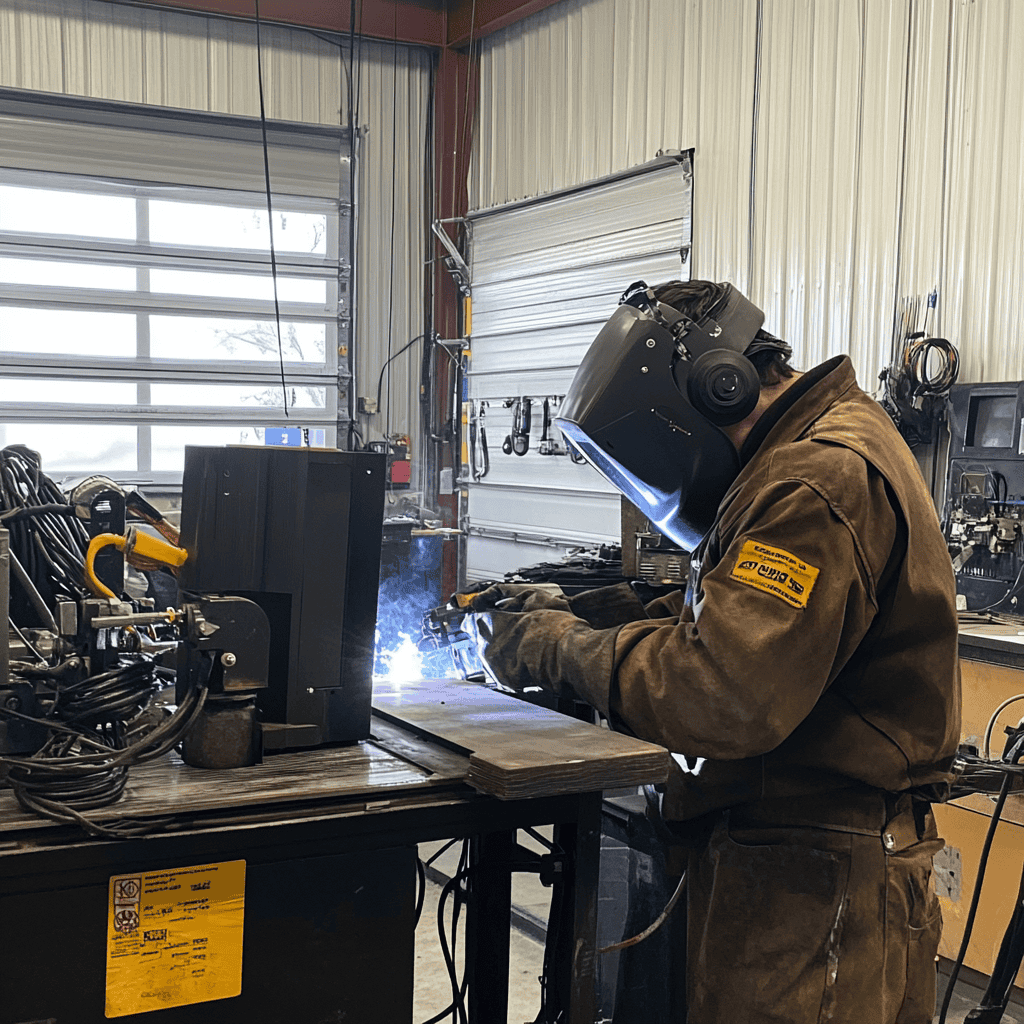
Voltage vs Current, What’s The Difference? (2024)

Voltage vs Current, What's The Difference? (2024)

Understanding the Differences Between Voltage vs Current

Electricity powers the modern world, but understanding its foundational principles can sometimes feel overwhelming. Two critical concepts in electricity are voltage and current. While these terms are often used interchangeably, they describe different aspects of electrical systems. In this article, we’ll break down their differences, explore their relationship, and highlight their importance in practical applications.

What is Voltage?

Voltage, often referred to as electric potential difference, is the driving force that pushes electrons through a circuit. It is the “pressure” that makes electrical charges move.

Units of Measurement: Voltage is measured in volts (V).
How Voltage Works: Voltage creates the energy required for current to flow. Imagine a water pump pushing water through a pipe—voltage acts as the pump.
Everyday Examples: Common sources of voltage include batteries (e.g., a 1.5V AA battery) and power outlets (typically 120V or 240V, depending on the country).

What is Current?

Current refers to the flow of electric charge through a conductor, such as a wire. It represents the movement of electrons powered by voltage.

Units of Measurement: Current is measured in amperes (amps or A).
How Current Works: Current is like the flow of water in a pipe—the actual movement of the electrical charge.
Everyday Examples: Current powers household devices like lightbulbs, heaters, and appliances. Higher current levels are required for devices that consume more power.

Key Differences Between Voltage and Current

Understanding how voltage and current differ is essential for working with electrical systems:

AspectVoltageCurrent
DefinitionElectric potential differenceFlow of electric charge
Cause/EffectThe “push” that drives currentThe result of voltage applied
MeasurementVoltmeterAmmeter
Impact on CircuitsHigh voltage may not mean high currentHigh current with low voltage may still be dangerous

For example, a static electric shock has high voltage but very little current, making it harmless. Conversely, a low-voltage car battery can deliver a high current, which can be hazardous.

Relationship Between Voltage and Current

Voltage and current are fundamentally linked through Ohm’s Law, which states: Voltage (V) = Current (I) × Resistance (R)

This formula demonstrates that the current flowing through a circuit is directly proportional to the applied voltage and inversely proportional to the resistance. Understanding this relationship is critical for designing and troubleshooting electrical systems.

The Role of Resistance

Resistance is the opposition to the flow of electric current within a circuit. It acts as a controlling factor in determining how much current flows for a given voltage:

  • High Resistance: Limits current flow, ensuring that sensitive components in a circuit are not damaged.
  • Low Resistance: Allows greater current flow, which can be beneficial for high-power applications but risky if the circuit is not designed to handle the load.

Materials play a key role in resistance:

  • Conductors like copper and silver have low resistance, facilitating high current flow.
  • Insulators like rubber or glass have high resistance, preventing current flow.

Practical Examples of Voltage and Current Interaction

  1. High-Resistance Devices:
    A 9V battery powering a device with high resistance, such as a remote control, will draw very little current. The high resistance ensures the circuit uses minimal energy, prolonging battery life.
  2. Low-Resistance Devices:
    Connecting the same 9V battery to a low-resistance device, such as a motor or heating element, will result in significant current flow. If the current exceeds the battery’s capacity or the circuit’s design limits, it can cause overheating or damage.
  3. Variable Resistance:
    Devices like dimmer switches or variable resistors (potentiometers) manipulate resistance to control current. For instance:
    • Increasing resistance reduces current, dimming a lightbulb.
    • Decreasing resistance allows more current to flow, brightening the light.

Applications of the Voltage-Current Relationship

  1. Circuit Protection:
    • Fuses and circuit breakers rely on the relationship between voltage, current, and resistance to interrupt the circuit if the current becomes too high, preventing overheating or fire.
  2. Power Transmission:
    • Power lines operate at high voltages to reduce current and minimize energy loss due to resistance over long distances.
  3. Component Design:
    • Electronic components like resistors, capacitors, and transistors are engineered with specific resistance values to control current flow and ensure proper operation of devices.
  4. Troubleshooting:
    • Understanding the relationship helps diagnose issues such as short circuits (low resistance causing excessive current) or open circuits (infinite resistance, preventing current flow).

Balancing Voltage, Current, and Resistance

Managing the interaction between voltage, current, and resistance is vital for efficient and safe electrical systems:

  • Too Much Current: Can damage components or cause overheating. Adding resistors or lowering voltage can mitigate this.
  • Too Little Current: May result in devices not functioning properly. Reducing resistance or increasing voltage can address this issue.

This interdependence highlights why understanding and controlling these variables is essential for electrical engineering and everyday applications alike. By mastering the relationship between voltage and current, one can design efficient circuits, ensure device safety, and optimize energy usage.

Applications and Importance of Voltage and Current

Both voltage and current are fundamental to the functioning of electrical and electronic systems. They work in tandem to power devices, transfer energy, and enable the operation of various technologies across multiple industries. Below are expanded insights into their specific applications and significance.

Voltage Applications

Power Transmission

  • High-Voltage Power Lines: Voltage is crucial in power grids for efficient electricity transmission. High-voltage lines reduce energy losses over long distances by minimizing the current, as lower current reduces resistive heating in the transmission cables. Step-down transformers then lower the voltage for safe residential or industrial use.
  • Renewable Energy Systems: Solar panels and wind turbines generate electricity at specific voltage levels, which are adjusted using inverters and transformers to meet grid requirements.

Battery Technology

  • Electric Vehicles (EVs): Voltage optimization is a cornerstone of EV battery design. Higher voltage systems (e.g., 400V or 800V) improve energy efficiency and enable faster charging.
  • Portable Electronics: Voltage levels in batteries determine the compatibility and performance of devices like smartphones, laptops, and wearables.

Industrial Applications

  • Motors and Machinery: Voltage regulates the speed and torque of industrial motors, ensuring precise control for manufacturing and automation processes.
  • Testing and Calibration: Laboratories and engineering environments use adjustable voltage supplies to test and calibrate electronic components and circuits.

Current Applications

Circuit Design and Safety

  • Current Management: Electrical engineers design circuits to handle specific current levels. Proper current control prevents overheating, component failure, and fire hazards.
  • Fuses and Breakers: Circuit breakers and fuses protect wiring by interrupting excessive current flow, safeguarding equipment and users.

Appliance Efficiency

  • Household Appliances: Devices are rated for current draw to ensure compatibility with standard wiring and outlets. Overdrawing current can trip breakers or cause voltage drops, impacting other appliances.
  • LED Lighting: Current control ensures consistent brightness and longevity in LED systems, which are sensitive to fluctuations.

Medical Devices

  • Life Support Systems: Current regulation is critical in medical devices like defibrillators and ventilators to ensure safe and effective operation.
  • Diagnostic Equipment: Imaging technologies like MRI and CT scanners require precise current control to produce accurate results.

The Interplay of Voltage and Current

In practical applications, voltage and current must be balanced to optimize performance and efficiency:

  • Energy Efficiency: High-voltage, low-current systems are favored for minimizing energy loss in power distribution.
  • Device Compatibility: Designers ensure that devices operate within the voltage and current limits specified by their components to avoid damage or inefficiency.

Voltage and current are the building blocks of modern technology, enabling the development and operation of countless systems we rely on daily. From powering homes and industries to advancing transportation and medical care, their proper management is indispensable.

Common Misconceptions About Voltage and Current

Understanding voltage and current is crucial for working with electrical systems, but misconceptions often lead to confusion or unsafe practices. Below are some clarified common misconceptions about these electrical properties.

Misconception: Voltage Equals Danger

Clarification:
High voltage alone is not inherently dangerous. The risk of electric shock or injury arises from the combination of high voltage and high current. Voltage provides the “push” for electrical energy, while current measures the flow of electricity. For a potentially harmful situation to occur, sufficient current must flow through the body or a conductive path.

Examples:

  • Static Electricity: Static shocks can involve thousands of volts but pose little danger because the current involved is minuscule.
  • Defibrillators: These medical devices use high voltage but control the current to deliver life-saving jolts without causing harm.

Safety measures in electrical systems, like insulation and grounding, focus on controlling both voltage and current to mitigate risks.

Misconception: Higher Voltage Means More Power

Clarification:
Voltage alone does not determine power. Power depends on both voltage and current, as expressed in the formula:
Power (W) = Voltage (V) × Current (I)

A high-voltage system may consume less power than a low-voltage system if the current is lower. Conversely, a low-voltage system with high current can demand more power.

Examples:

  • LED Bulbs: These operate at low voltage but require minimal current, resulting in very low power consumption despite the low voltage.
  • High-Voltage Transmission Lines: These carry electricity over long distances with low current, reducing power loss even at high voltage levels.

The interplay between voltage and current highlights the importance of understanding both when designing or using electrical systems.

Misconception: More Voltage Always Improves Performance

Clarification:
While higher voltage can improve performance in some systems, it is not universally beneficial. For example:

  • High voltage may reduce energy losses in power transmission but requires advanced insulation and safety measures.
  • Electronic devices are designed to operate within specific voltage ranges, and exceeding these can damage components.

Proper voltage regulation ensures that systems operate efficiently without compromising safety or reliability.

Why These Misconceptions Matter

Misunderstanding voltage and current can have far-reaching consequences in electrical and electronic systems. These misconceptions can compromise safety, reduce system efficiency, and damage sensitive components, making it critical to address and correct them.

Unsafe Practices

Impact:
Many people mistakenly believe that high voltage alone is inherently dangerous, leading to unnecessary fear or, conversely, a false sense of security when working with low-voltage systems. This can result in:

  • Neglecting Current Risks: Focusing solely on voltage might cause individuals to overlook the potentially lethal effects of even low-voltage systems with high current.
  • Improper Safety Measures: Protective gear or equipment might be selected based on voltage alone, failing to account for current levels that could cause injury or damage.

Examples:

  • Touching a high-voltage, low-current device may be harmless, but handling a low-voltage, high-current system without appropriate precautions can lead to severe burns or electrocution.
  • Failing to ground high-current equipment properly due to underestimating its danger increases the risk of accidents.

Inefficient Designs

Impact:
Misapplying the relationship between voltage, current, and power often results in inefficient systems that waste energy or fail to meet operational needs. For instance:

  • Overestimating the benefits of high voltage may lead to unnecessary complexity or cost in the design.
  • Using low-voltage systems inappropriately for high-power applications can cause excessive energy loss due to high current requirements.

Examples:

  • Power transmission lines use high voltage to minimize current and reduce energy losses over long distances. Ignoring this principle in system design can result in significant power wastage.
  • Designing electronic devices with improper voltage and current ratings can lead to inefficiencies, overheating, or premature failure.

Component Damage

Impact:
Using incorrect voltage or current levels can damage electrical components, leading to costly repairs or replacements. Devices are typically designed to operate within specific parameters, and exceeding these can result in:

  • Overheating: High current levels generate excessive heat, which can degrade or destroy components.
  • Voltage Overload: Applying too much voltage can exceed a device’s insulation capacity, causing short circuits or permanent failure.

Examples:

  • Connecting a 12V device to a 24V power source can cause immediate and irreversible damage.
  • Drawing too much current through a thin wire can cause it to overheat and melt, potentially leading to electrical fires.

The Importance of Addressing Misconceptions

By debunking these misconceptions, individuals and professionals can:

  • Enhance Safety: Understanding the roles of both voltage and current ensures appropriate precautions are taken, reducing the risk of accidents and injuries.
  • Improve Efficiency: Accurate knowledge leads to better system designs that maximize energy use and minimize waste.
  • Extend Equipment Lifespan: Properly matching voltage and current levels to device specifications prevents premature wear or failure.
  • Foster Innovation: A clear understanding of electrical principles enables the development of more effective, efficient, and safer technologies.

Correcting misconceptions about voltage and current is not just a theoretical exercise—it is essential for practical applications in everyday life, from ensuring safe household wiring to advancing complex industrial systems. By fostering accurate knowledge, we create a foundation for safer, more efficient, and reliable electrical systems.

Conclusion

Voltage and current are two sides of the same electrical coin, working together to power everything from small gadgets to large industrial machines. Voltage acts as the force driving the flow, while current is the actual movement of electric charge. Understanding their differences and relationship is crucial for anyone working with electrical systems.

By appreciating how voltage and current interact, you can better diagnose electrical issues, design efficient circuits, and ensure safe operation in everyday applications. Whether you’re a professional electrician, an electronics hobbyist, or simply curious, these fundamental principles are the foundation of all things electrical.

Additional Resources

Get your welding gear here.

error: Content is protected !!